
The Six Things Every Local Service Business Website Needs in 2026
Forget Me Never Media has driven 150,000+ website visitors and generated 15,000+ leads across our client base, with an average revenue growth of 185% for local service businesses. Every site we build is structured around the same six elements — not because they're trendy, but because they're the difference between a website that generates leads and one that burns every dollar spent driving traffic to it.
Most local service business websites are missing at least three of these. Some are missing all six. This isn't a design critique — it's a lead generation audit. Here's what every local service business website needs in 2026, and why each one matters.
1. Load Speed That Doesn't Lose Visitors Before They See You
Google's own data shows that 53% of mobile visits are abandoned when a page takes more than 3 seconds to load. For a local service business where the majority of searches happen on mobile — 71% of all Google searches as of 2025 — a slow website isn't a technical inconvenience. It's a lead generation problem.
Most template-built websites, particularly those running WordPress with multiple plugins for basic functionality, routinely miss this threshold on mobile. The problem isn't fixable with a single optimization pass — it's structural. Plugin bloat, unoptimized images, and shared hosting infrastructure create performance ceilings that are difficult to break through without rebuilding on a faster foundation.
Every Forget Me Never Media website is built on Duda because the platform handles performance at the infrastructure level. The target is a load time under 2 seconds on mobile. That's not a preference — it's the baseline that keeps visitors on the page long enough to see what the business does.
2. A Hero Section That Answers the Right Question Immediately
The hero section — the first thing a visitor sees without scrolling — has one job: confirm the visitor is in the right place. Most local service website hero sections fail this job because they describe the company rather than addressing the visitor's immediate need.
"Quality service since 1995" describes the company. "Emergency roof repair — same-day response for Nashville homeowners" addresses the visitor's need. The second version earns the visitor's attention. The first version loses it.
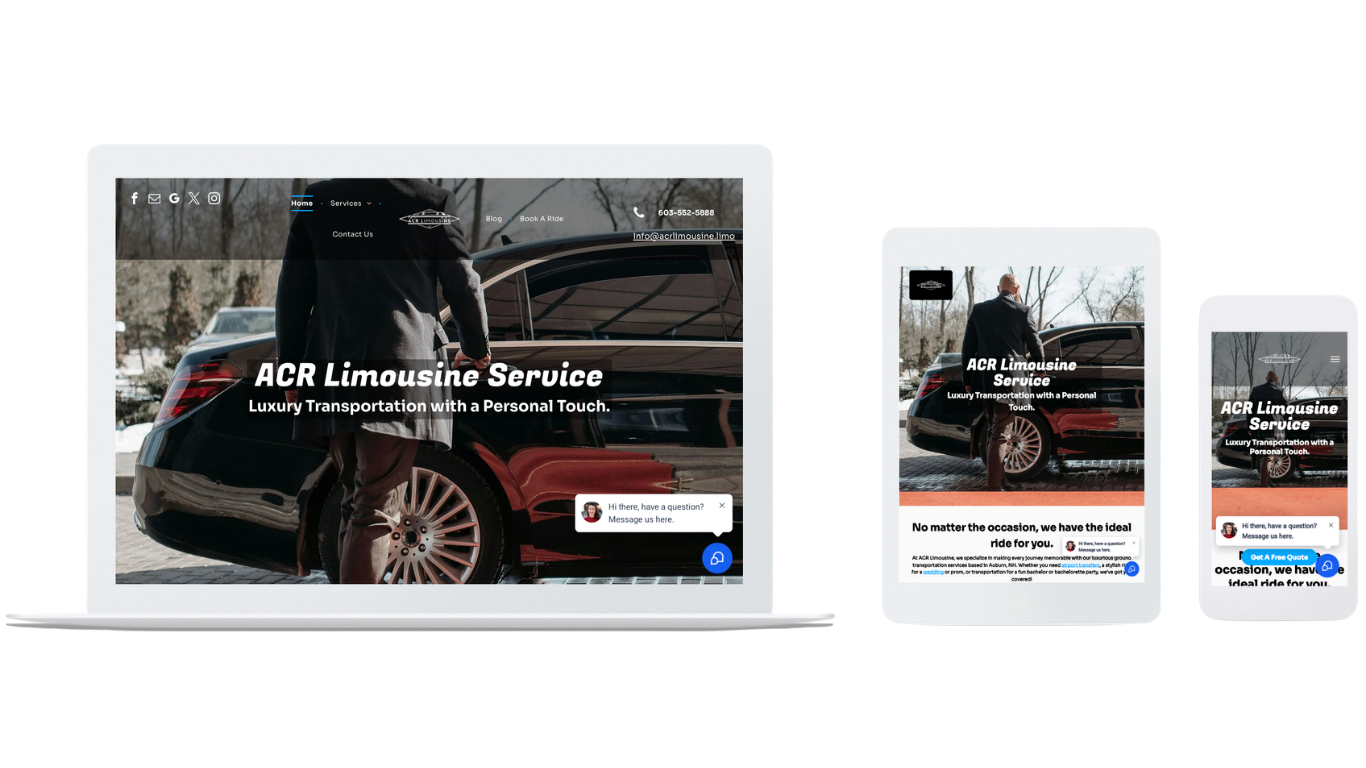
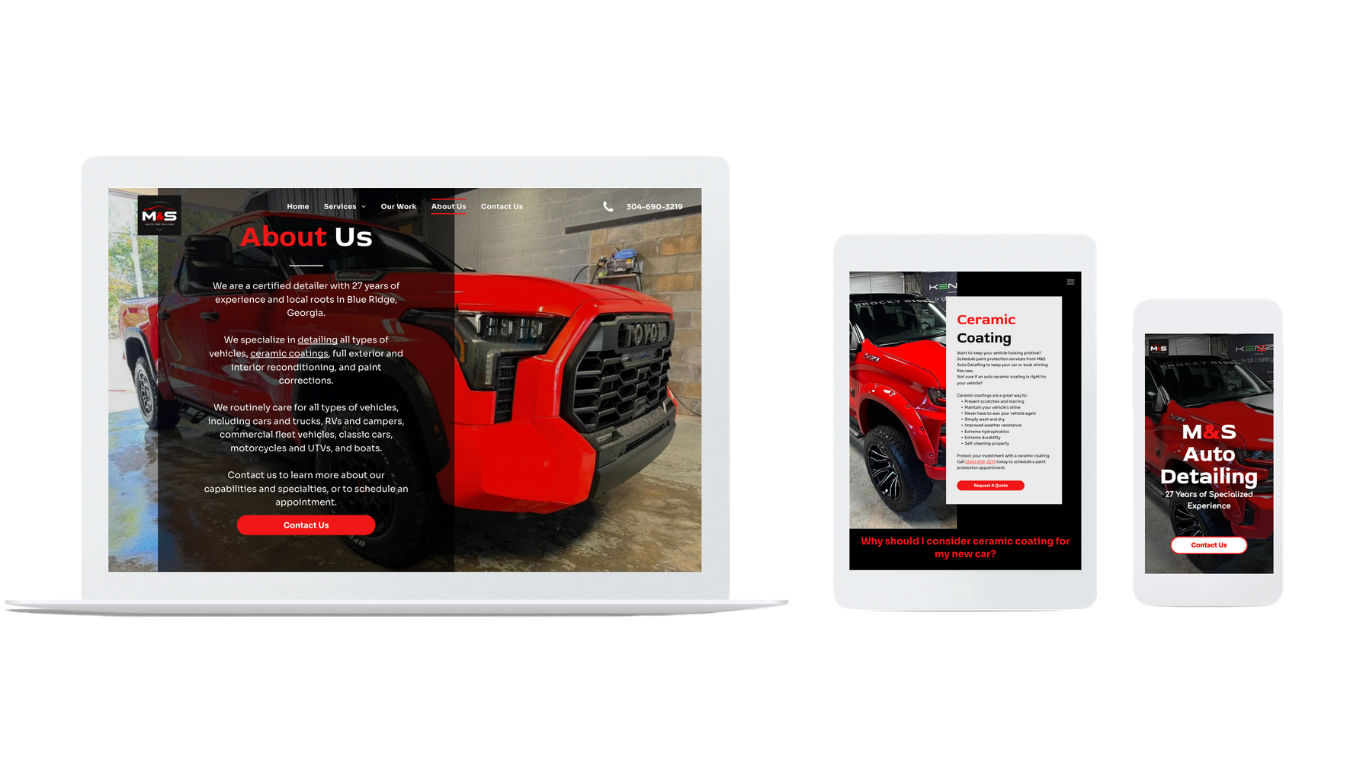
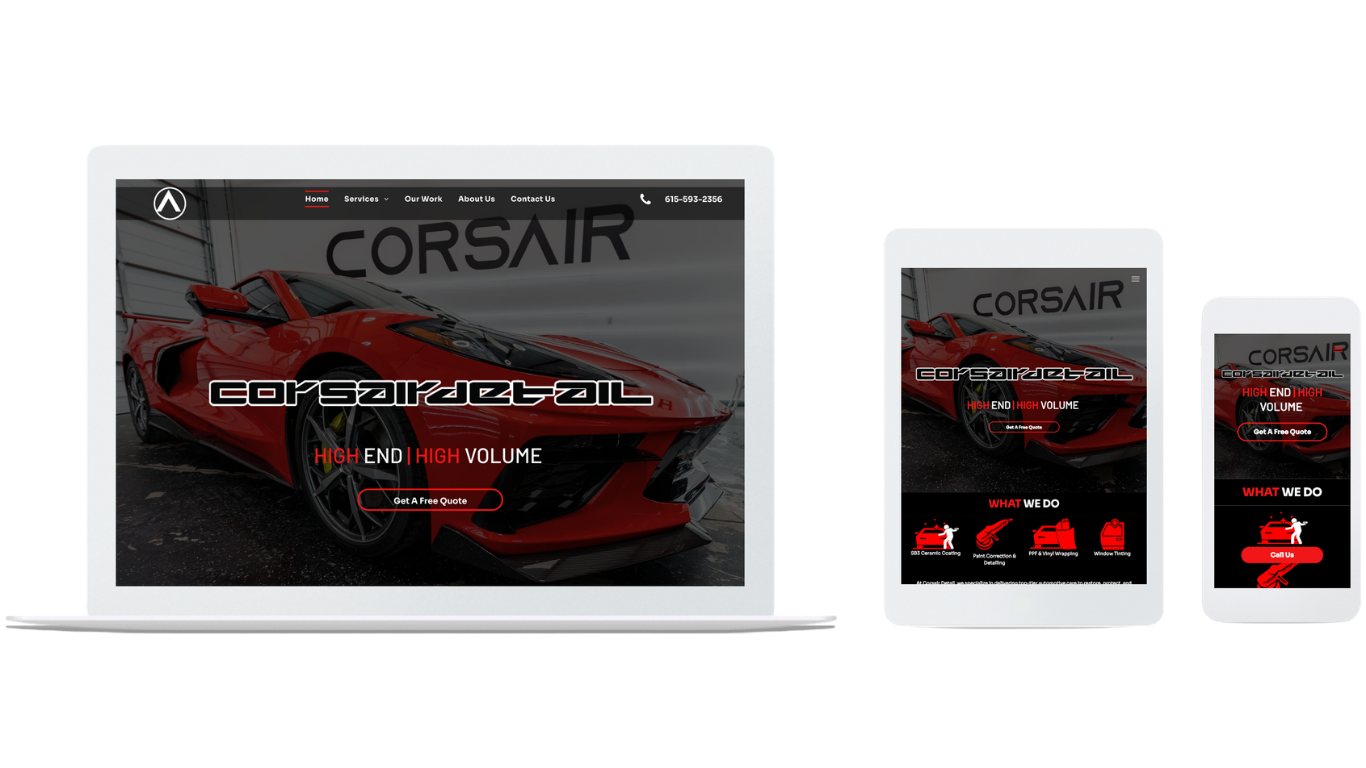
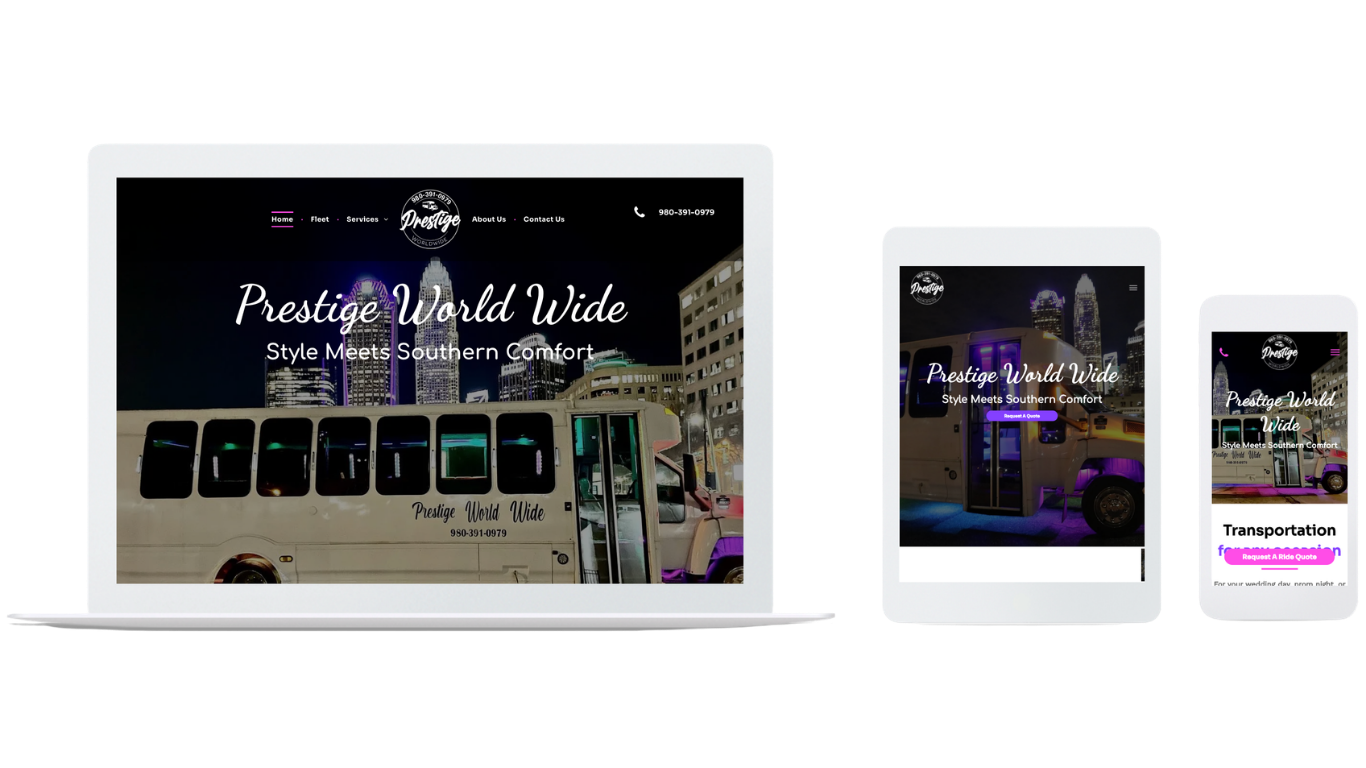
A converting hero section needs five things working together: a headline that names the specific service and location, a subheadline that addresses the most common customer concern, a visible and clickable phone number, one strong credibility signal — a specific result, a credential, a client count — and a primary call to action that tells the visitor exactly what happens when they click it.
Generic is the enemy of conversion. Every word in a hero section should be specific enough that a visitor knows immediately whether they've found the right business for their specific problem.
3. Mobile Optimization Built Around How Customers Actually Search
As of 2025, 71% of Google searches happen on mobile devices. For local service businesses, that number is higher because their customers are often searching in context — standing near the problem, dealing with an urgent situation, comparing options from their phone. A website that works on desktop but creates friction on mobile is losing the majority of its qualified search traffic before those visitors ever take action.
Mobile optimization isn't just responsive design — it's rethinking which information appears first, how contact options work on a touchscreen, how forms behave on a small keyboard, and how fast the page loads on a cellular connection. A phone number that isn't click-to-call on mobile is a conversion barrier. A contact form that requires zooming and scrolling to complete is a conversion barrier. A page that takes five seconds to load on a cellular connection is a conversion barrier.
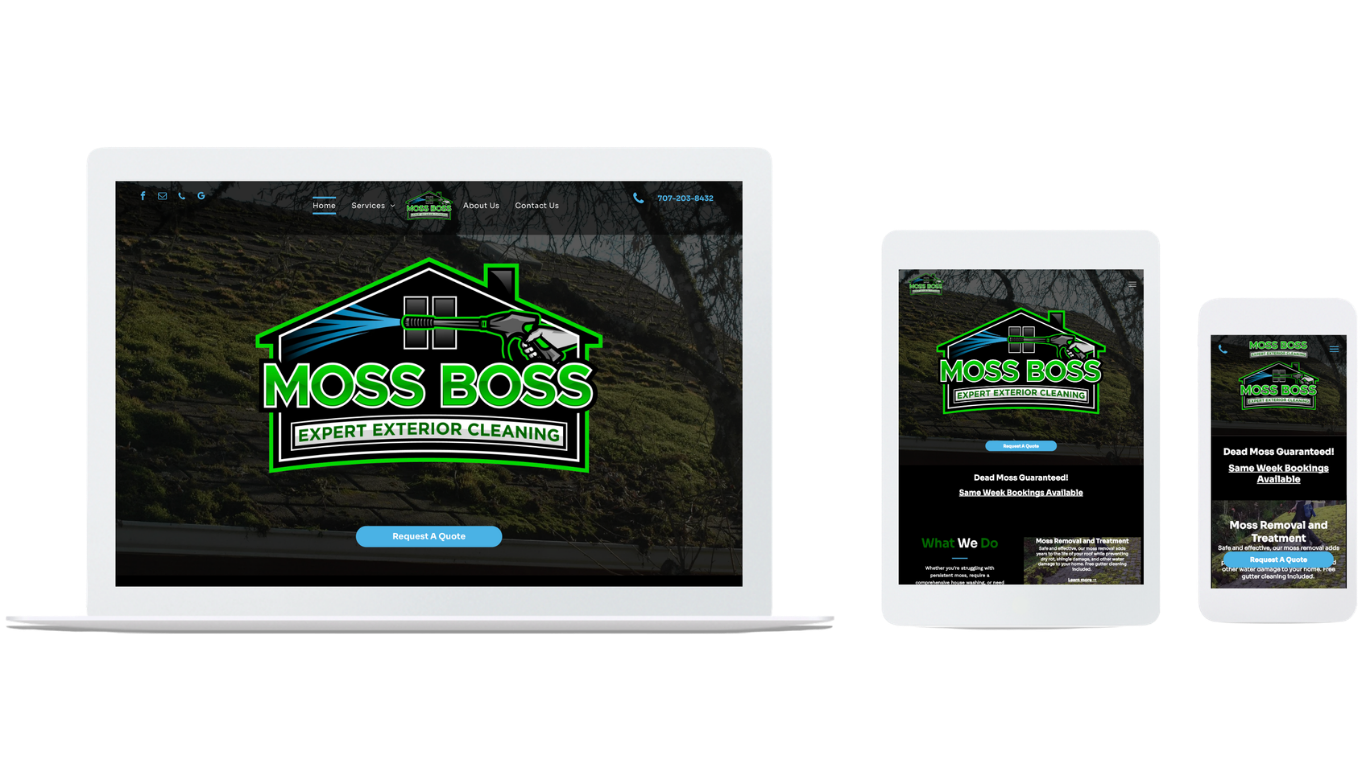
Moss Boss of Humboldt's website rebuild prioritized mobile-first architecture for customers searching for exterior cleaning services on their phones. Organic search traffic increased 272% in six months and the site achieved a 15%+ traffic-to-lead conversion rate — in a market where mobile search drives the majority of new customer inquiries.
4. Lead Capture That Matches How Customers Want to Contact You
Most local service business websites offer one contact option — a form — when the majority of their customers want to call. Most local service business forms ask for too much information when customers have an immediate need and limited patience. Both problems kill conversions that a better-designed contact system would have captured.
The primary contact option for a local service business should always be a phone number — prominent, clickable on mobile, and visible on every page without scrolling. Phone calls convert faster and give you the opportunity to address specific concerns that copy alone can't handle.
The secondary option — a form — should ask for the minimum information needed to start a conversation. Name, phone number, and a brief description of what they need is enough. Everything else can be gathered during the call. A form with too many required fields creates friction at exactly the moment a customer has decided to reach out — and friction at that moment loses leads that were already won.
The follow-up system behind the form matters as much as the form itself. A visitor who submits a request at 9 PM and doesn't hear back until the following afternoon has likely already hired someone else. Every Forget Me Never Media website connects to automated follow-up that responds within minutes regardless of when the inquiry comes in.
5. Local SEO Integration Built Into the Page Structure
A website that isn't structured for local search is invisible to the customers who matter most — people in your service area searching for your specific services right now. This goes beyond mentioning your city name in the copy. It requires building the site architecture around how local searches actually work.
Each service should have its own dedicated page targeting the specific keywords customers use when they search for that service in your area. One generic services page that lists everything the business does is a missed opportunity to rank for every individual service search. Individual pages for ceramic coating, paint protection film, and mobile detailing capture searches that a single "auto detailing services" page never will.
Local business schema markup tells search engines exactly what services you provide, where you provide them, and how to verify your business information. It's the technical signal that helps your business appear in local map results alongside organic rankings. Most template-built websites are missing it entirely because the developers who built them didn't specialize in local SEO.
Service area pages for every city or region you serve give Google location signals that the homepage alone can't provide — and they capture searches from customers in those specific areas who never would have found a page that only mentions the primary business location.
6. Conversion Tracking That Measures Leads, Not Just Traffic
Most local service business websites track page views, session duration, and bounce rate — metrics that tell you how many people visited and how long they stayed, but not whether any of them became customers. Tracking traffic without tracking conversions is like counting people who walk past your storefront without counting how many came inside.
The metrics that matter for a local service business are phone calls attributed to organic search, form submissions by source, and ultimately revenue connected to website-generated leads. When you know which pages generate calls, which traffic sources produce the highest-quality leads, and which contact options convert best on mobile versus desktop, every future decision about the website improves.
Call tracking software assigns unique phone numbers to different traffic sources and pages, revealing which parts of your website and marketing are actually driving customers to call. Without it, you're making website decisions based on traffic data while staying blind to the lead data that would tell you whether those decisions are working.
Josh built Forget Me Never Media around the principle that real numbers matter more than impressive-looking dashboards. Tracking 150,000+ website visitors means nothing if those visitors don't become customers. The six elements above work together as a system — fast load speeds bring visitors in, the hero section earns their attention, mobile optimization keeps them engaged, lead capture converts them, local SEO brings the right ones, and conversion tracking shows which parts of the system to improve.
No long-term contracts. No templates built for someone else's business. Just websites built around the six things that actually determine whether a local service business generates leads or generates reports.
Table of Contents
IS YOUR BUSINESS READY FOR 2026?
Get a free digital marketing audit and see exactly where your biggest opportunities are hiding.