
Negative Keywords: The Most Underused Tool in Google Ads Management
When Forget Me Never Media audits a new Google Ads account, the search term report is always the first place Josh looks. In 12 years of managing paid search campaigns for local service businesses, he has seen accounts where as much as 70% of total ad spend was triggering on searches that had no realistic chance of converting into a customer. Job seekers. DIY researchers. Students. People in completely different geographic markets. All paying full price per click, all generating zero revenue.
Negative keywords are the mechanism that prevents this. They're the searches you explicitly tell Google not to show your ads for. Most agencies treat them as an afterthought — adding a handful of obvious terms during setup and never revisiting the list. That neglect costs local service businesses real money every month, quietly and invisibly, while the monthly report focuses on click-through rates and impression share.
What Google's Matching Behavior Actually Does to Your Budget
Google's algorithm is designed to spend your budget. Every click generates revenue for Google regardless of whether it converts for you. Without explicit negative keywords telling Google which searches are irrelevant, the algorithm will stretch your campaign to match searches that sound related to your keywords but represent completely different intent.
A plumbing company targeting "emergency plumber" without negative keywords will show ads for "plumber salary," "plumber apprenticeship," and "how to become a plumber." A pressure washing company will show for "pressure washer reviews," "pressure washing equipment for sale," and "how to pressure wash a driveway yourself." An auto detailer will show for "auto detailing jobs," "detailing supplies wholesale," and "car detailing school." None of those searches represent a customer who needs to hire anyone.
The problem compounds because irrelevant clicks don't just waste budget directly — they drag down your campaign's conversion rate, which signals to Google that your ads aren't relevant, which raises your cost per click on the searches that do convert. Every dollar spent on the wrong traffic makes the right traffic more expensive.
Building a Negative Keyword List That Actually Works
The most reliable source of negative keywords isn't a template or an industry list — it's your own search term report. Google shows you every search that triggered your ads. Download 90 days of search term data and work through every entry with one question: is this a potential customer?
Searches fall into three categories. Some you want more of — add those keywords to your campaign as targets. Some need more data before you can decide — flag them and check again in two weeks. Some are clearly wrong — add them as negative keywords immediately. This "convert it, watch it, block it" process run consistently is what separates a campaign that gets sharper over time from one that wastes the same budget on the same irrelevant searches month after month.
Negative keywords work at three match levels and each blocks a different pattern of searches. Broad match negatives block any search containing that word anywhere in the query — adding "jobs" as a broad match negative stops "plumber jobs," "jobs for plumbers," "detailing jobs near me," and every other combination containing that word. Phrase match negatives block searches containing those words in that specific order. Exact match negatives only block searches that match the term precisely. Most accounts need all three match types working together to provide complete protection.
The Categories Most Agencies Miss
Standard negative keyword templates cover the obvious categories — jobs, training, DIY, salary, certification. What they miss are the industry-specific and business-specific searches that require knowing the actual business.
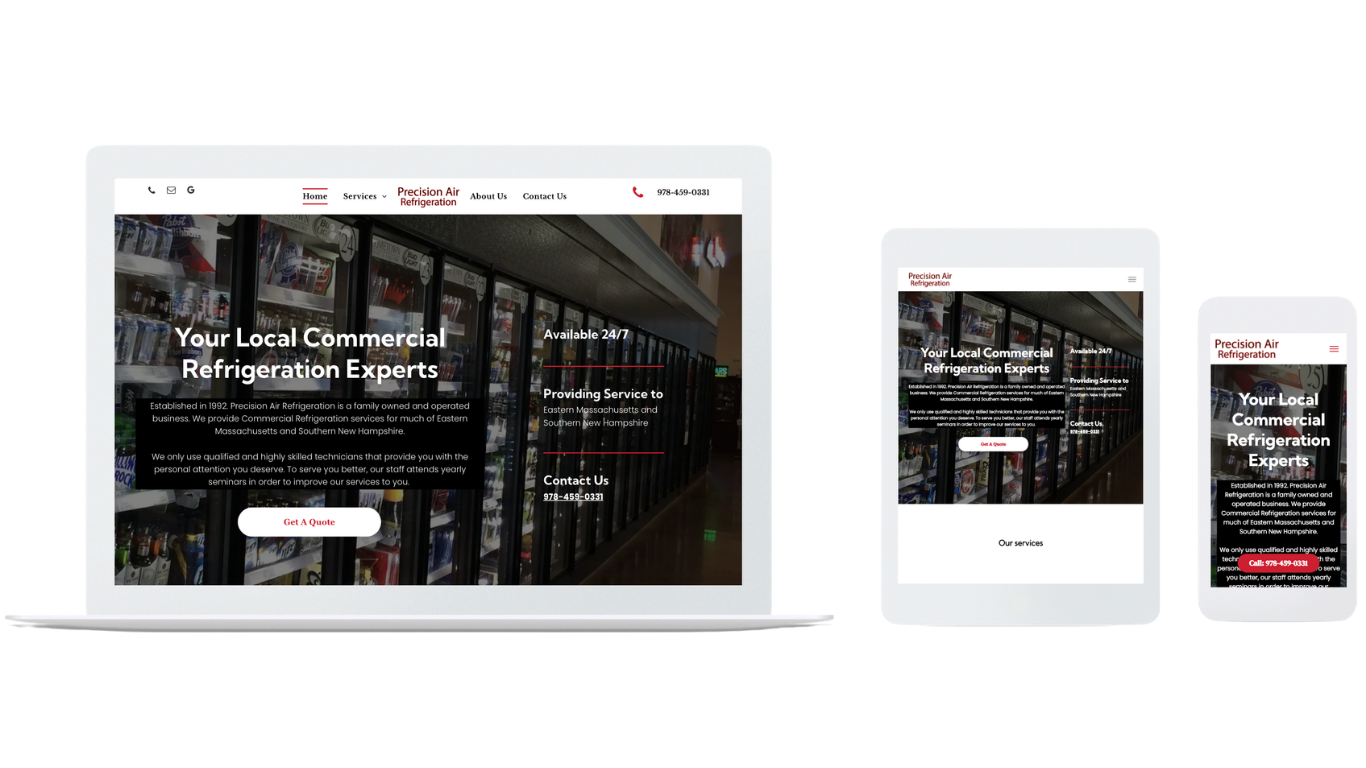
Precision Air Refrigeration's campaign was generating inquiries from residential homeowners searching for home refrigerator repair — searches that sounded plausible but were completely wrong for a commercial refrigeration company serving restaurants, hotels, and grocery stores. The residential terms weren't in any generic negative keyword template because they're relevant for most appliance repair businesses. For Precision Air specifically, terms like "home refrigerator," "fridge repair," "appliance repair," and "residential refrigeration" needed to be excluded entirely. After rebuilding the campaign with commercial-specific targeting and comprehensive residential negative keywords, their conversion rate went from 3.5% to 13.85% — and the leads that came in were the commercial clients they actually wanted.
Seasonal negatives are another category most agencies don't manage actively. A pool service company needs "pool heater repair" as a negative in summer months but should remove it before fall when heating becomes relevant. A landscaping company should block "snow removal" during the growing season. These adjustments require someone paying attention to the account throughout the year, not a set-and-forget approach.
Budget-intent negatives are worth considering for businesses with premium positioning. Searches containing "cheap," "free," "discount," and "budget" often signal price shoppers who won't pay professional service rates. A luxury transportation company, a high-end detailer, or a premium contractor may want to exclude these searches entirely — not because those customers don't exist, but because they're not the customers this business can profitably serve.
Why This Work Is Never Finished
Search behavior changes. Google's algorithm finds new ways to match your keywords to adjacent searches. New competitors enter your market and bid on terms that create new patterns. A negative keyword list built at campaign launch and never updated stops protecting your budget within months.
Weekly search term audits are what keep a negative keyword list functional over time. Every week, the new search terms that triggered ads need to be reviewed and categorized. The ones that don't belong get added to the list immediately rather than waiting for a monthly review. This ongoing work isn't glamorous — it's the kind of detail management that distinguishes a professionally managed campaign from one running on autopilot.
Josh manages every Forget Me Never Media client account personally because negative keyword management requires understanding each business specifically. The searches that are irrelevant for a commercial refrigeration company in Massachusetts are completely different from the ones that are irrelevant for a residential exterior cleaner in California. Cookie-cutter negative keyword lists built for a generic industry category miss the business-specific patterns that matter most.
Corsair Detail's negative keyword list for their Nashville ceramic coating and paint protection film campaigns excludes a different set of terms than their basic detailing campaigns — because the customers searching for premium paint protection film are different from customers searching for a standard detail, and the adjacent irrelevant searches are different too. Managing that nuance is what produced 805 total leads and a 47% increase in lead generation year over year for a campaign that had been losing significant budget to irrelevant traffic.
What Proper Negative Keyword Management Actually Produces
The goal isn't fewer clicks. The goal is fewer wrong clicks — which means a higher percentage of the remaining clicks convert into customers, a lower cost per acquisition, and a campaign that gets more efficient over time rather than steadily more expensive.
In our experience across 40+ client accounts, campaigns that receive proper ongoing negative keyword management consistently outperform campaigns that don't — not because the keywords being targeted changed, but because the budget stopped being diluted by searches that were never going to produce a customer.
No long-term contracts. No monthly reports celebrating click-through rates while your phone stays quiet. Just campaigns managed by someone who looks at the search terms every week and makes the adjustments that keep your budget working for your business.
Table of Contents
IS YOUR BUSINESS READY FOR 2026?
Get a free digital marketing audit and see exactly where your biggest opportunities are hiding.