
Google Ads for Local Service Businesses: What Works, What Doesn't
Josh has spent 12 years managing Google Ads campaigns — not for e-commerce stores, not for SaaS companies, not for national brands. For local service businesses. Contractors, auto detailers, transportation companies, exterior cleaners, commercial service providers. The businesses where a single job is worth hundreds or thousands of dollars, where customers make decisions under urgency rather than leisure, and where the difference between a click and a customer is enormous.
Forget Me Never Media's clients see an average of 185% revenue growth. A meaningful share of that comes from Google Ads campaigns built around how local service customers actually search — not how agencies assume they search. Here's what that distinction looks like in practice.
Why Most Google Ads Campaigns Fail Local Service Businesses
Most Google Ads agencies optimize for the metrics they can easily report — click-through rate, impression share, quality score. These are real numbers that sound meaningful and look good in a monthly report. None of them tell you whether your phone is ringing.
The failure pattern is consistent across every local service business that comes to Forget Me Never Media after a bad agency experience. The previous agency celebrated traffic increases while revenue stayed flat. They optimized for keywords that generated clicks from people who would never hire anyone. They applied the same campaign structure to a plumber in Nashville that they'd use for a furniture retailer in Phoenix. They handed the account to someone junior who didn't understand the economics of a service business — where a single converted lead might be worth more than an entire month of e-commerce transactions.
Local service businesses need campaigns built around one question: which searches are made by people who are ready to hire someone today, in my service area, for the specific work I do? Everything else is a distraction.
Build Campaign Structure Around Urgency, Not Categories
The most important structural decision in a local service Google Ads account is how you organize searches by urgency level. Someone searching "emergency roof repair" is in a completely different mental state than someone searching "roof replacement cost estimate." The first person needs a phone call within minutes. The second is weeks away from a decision. Treating these searches the same way — same bid, same ad copy, same landing page — wastes budget and loses both customers.
Josh structures every local service account around urgency tiers. Emergency searches get high bids, mobile-first ad copy that leads with availability and response time, and landing pages where the phone number is the first thing a visitor sees. Scheduled service searches get moderate bids, copy that emphasizes quality and credentials, and landing pages that support a longer evaluation process with project photos and reviews. Research searches — people who are planning but not yet deciding — get lower bids and content that builds familiarity without expecting an immediate conversion.
This structure means budget goes where conversion potential is highest, and ad messaging matches what the searcher actually needs at that moment. An emergency customer who lands on a page talking about your company history is going to call someone else. An emergency customer who lands on a page that says "available now — call us" is going to call you.
Geographic Targeting Requires More Than a Mile Radius
Most agencies set geographic targeting by drawing a circle around a business location — usually a round number of miles that sounds reasonable — and leaving it there. For a local service business where travel time directly affects profitability, that approach costs money on every job.
The right geographic targeting for a local service business is built around drive time from the business location, adjusted by the value of jobs in different areas. A detailer based in Nashville whose most profitable work comes from Brentwood and Franklin needs tighter geographic focus and higher bids in those specific areas — not a uniform radius that includes areas where travel time makes the job unprofitable.
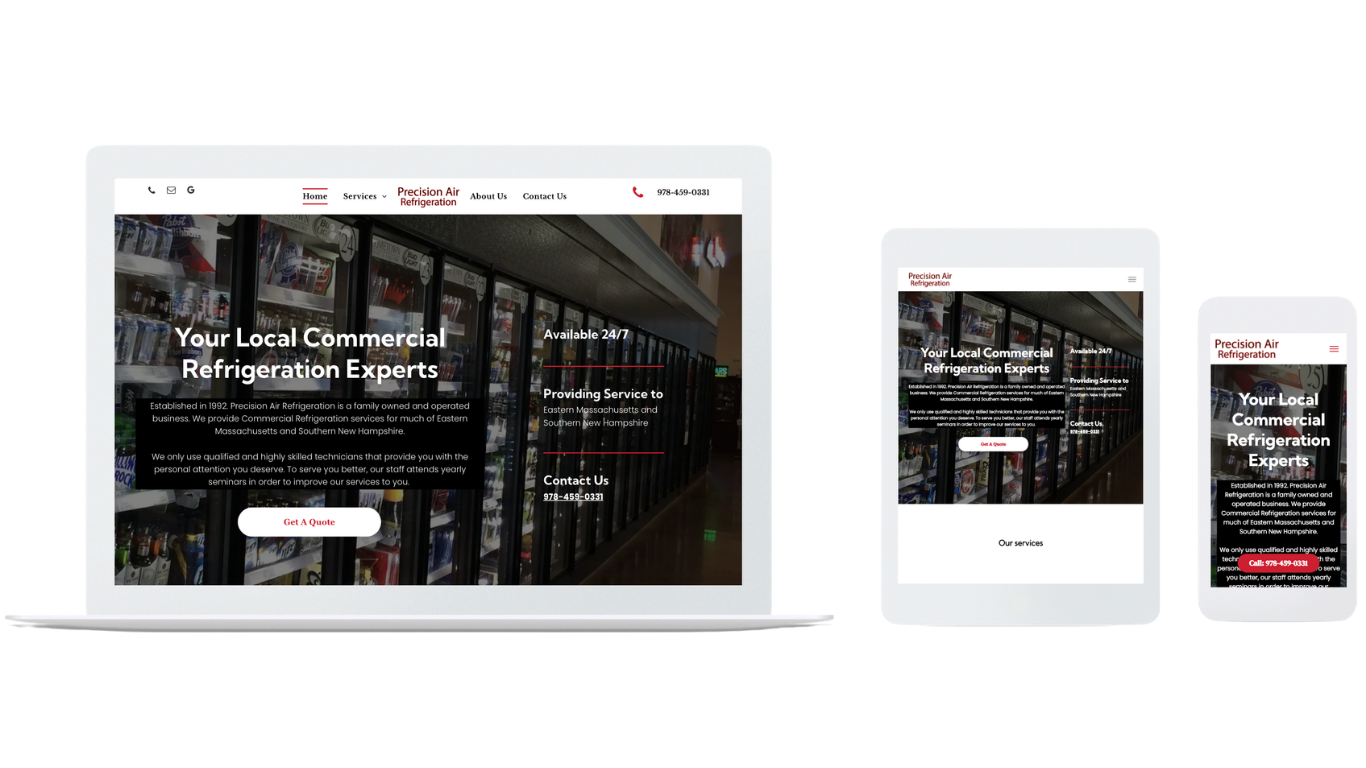
Precision Air Refrigeration serves Eastern Massachusetts and Southern New Hampshire. Their campaign geographic targeting reflects the commercial density of their service area — higher bids in areas with concentrations of restaurants, hotels, and grocery stores that represent their ideal commercial clients, lower bids in residential-heavy areas that generate the wrong type of inquiry. After rebuilding their campaign structure around commercial intent and geographic precision, their conversion rate went from 3.5% to 13.85% and they generated 317 qualified commercial leads in 12 months.
Negative Keywords Are Half the Campaign
What you exclude from a Google Ads campaign matters as much as what you include. For local service businesses, negative keywords are the mechanism that keeps budget focused on qualified buyers and away from searches that generate clicks without conversions.
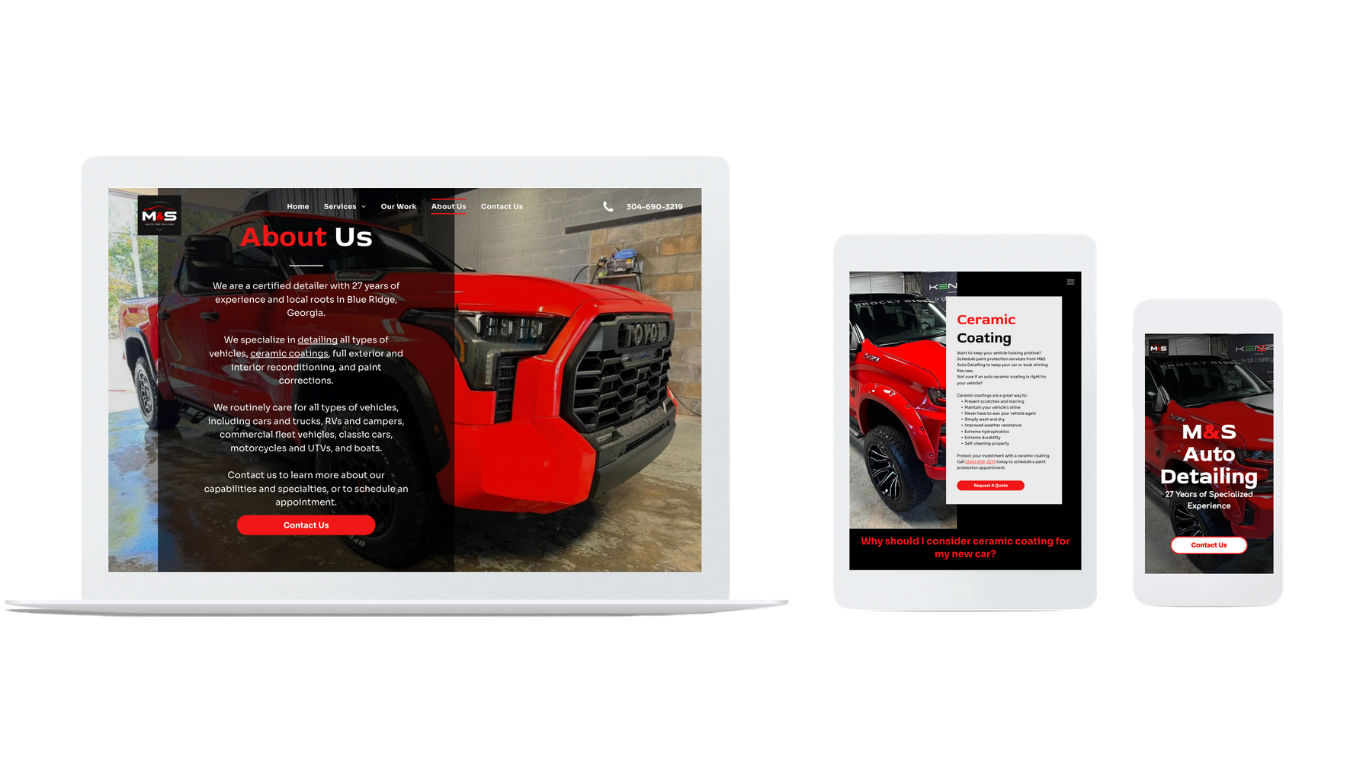
A commercial refrigeration company needs to exclude residential terms — "home refrigerator," "fridge repair," "appliance repair" — so budget doesn't get spent on homeowners who need a different type of service entirely. A luxury transportation company needs to exclude budget terms — "cheap limo," "discount party bus," "affordable shuttle" — so ad spend reaches customers willing to pay for premium service. An auto detailer offering ceramic coating and paint protection film needs to exclude DIY terms — "ceramic coating kit," "how to apply PPF," "DIY paint correction" — so ads reach customers who want professional work rather than instructions on doing it themselves.
Most agencies build negative keyword lists from templates rather than from the specific business's lead quality data. The result is campaigns that spend budget on searches that look relevant but never convert into the type of customer the business actually wants. Building a negative keyword list from real search term reports — the actual queries that triggered ads — is ongoing work that pays compound dividends as the list grows.
Budget Should Reflect Job Economics, Not Industry Averages
The right Google Ads budget for a local service business is calculated from the bottom up — job value, close rate, target cost per acquisition — not from what Google recommends or what industry benchmarks suggest.
A business with an average job value of $3,000 and a 40% close rate on qualified leads can afford a meaningfully higher cost per lead than a business with an average job value of $300 and a 20% close rate. Setting the same cost-per-click targets for both businesses guarantees that one is leaving profitable leads unpursued and the other is spending more than a lead is worth.
Corsair Detail came to Forget Me Never Media with high advertising costs relative to the revenue those ads were generating. After rebuilding their campaign structure around their actual job economics and shifting budget toward the searches that produced their most valuable customers, they reduced cost per lead significantly while growing total lead volume 47% year over year — 805 total leads in the following period.
What Happens When the Campaign Is Built Correctly
A Google Ads campaign built for a local service business should do one thing consistently: put your business in front of people who are ready to hire someone for your specific services in your specific service area, at a cost per acquisition that makes the investment profitable.
That's not complicated in concept. It's specific in execution — and the specificity requires understanding the economics of service work, the psychology of urgent service searches, and the geographic realities of a business that travels to its customers.
Twelve years of managing these campaigns has shown Josh one consistent pattern: the businesses that get the best results from Google Ads are the ones willing to build the campaign around their actual business rather than accepting a generic structure designed for a different type of company entirely.
No long-term contracts. No vanity metrics dressed up as results. No junior account managers running campaigns without oversight. Just campaigns built around the searches that generate the customers your business actually wants.
Table of Contents
IS YOUR BUSINESS READY FOR 2026?
Get a free digital marketing audit and see exactly where your biggest opportunities are hiding.