
What "Local SEO" Actually Means for a Service Business
Josh has driven over 150,000 website visitors across his client base and generated more than 15,000 leads through strategic local search optimization. But here's what he learned after 8 years managing local SEO campaigns: most service businesses waste money on tactics that look impressive but don't convert. This article strips away the jargon around local SEO and shows you what actually matters for getting your phone to ring. You'll understand why your current approach might be driving traffic that never becomes revenue, and how to fix it without getting trapped in another agency contract that promises everything and delivers vanity metrics that never turn into revenue.
Nearly half of all Google searches have local intent, according to Google's own data. That means billions of searches every day from people looking for a service provider in their area, not researching a topic or browsing for entertainment. They have a problem. They need someone to fix it. The question is whether they find you or your competitor. Most local SEO efforts answer that question wrong — not because the tactics don't work, but because they're optimizing for the wrong thing entirely.
Most Local SEO Focuses on Rankings Instead of Revenue
The biggest problem with local SEO isn't that agencies don't know how to improve search rankings. It's that they measure success by metrics that don't pay your bills. When Josh launched Forget Me Never Media in June 2024, he had already watched too many local service businesses get burned by agencies that celebrated first-page rankings while the business owner's phone stayed silent.
Agencies hide behind vanity metrics — impressions, traffic, keyword positions — that look good in monthly reports but have no connection to actual customer acquisition. They'll show you charts about increased website visitors while your booking calendar stays empty. Real local SEO for service businesses starts with one question: which searches actually bring people who are ready to hire someone today?
Your contractor business doesn't need to rank for "home improvement tips" if that traffic never converts. It needs to show up when someone searches "emergency roof repair near me" — the search with urgency behind it, money behind it, and a decision that gets made in the next ten minutes. The difference between these approaches isn't just strategy. It's revenue.
Your Business Shows Up for Searches That Don't Convert
Most service businesses rank for the wrong keywords entirely. A business will rank on page one for broad terms like "landscaping services" but nowhere to be found when someone searches "lawn care emergency Sunday morning" — the search that actually leads to a service call.
The problem starts with keyword research that ignores buyer intent. Generic SEO approaches target high-volume keywords that sound impressive in reports but attract browsers instead of buyers. A pressure washing company doesn't need traffic from people researching "how to clean concrete yourself." It needs visibility when someone searches "pressure washing service today" or "concrete stain removal company near me."
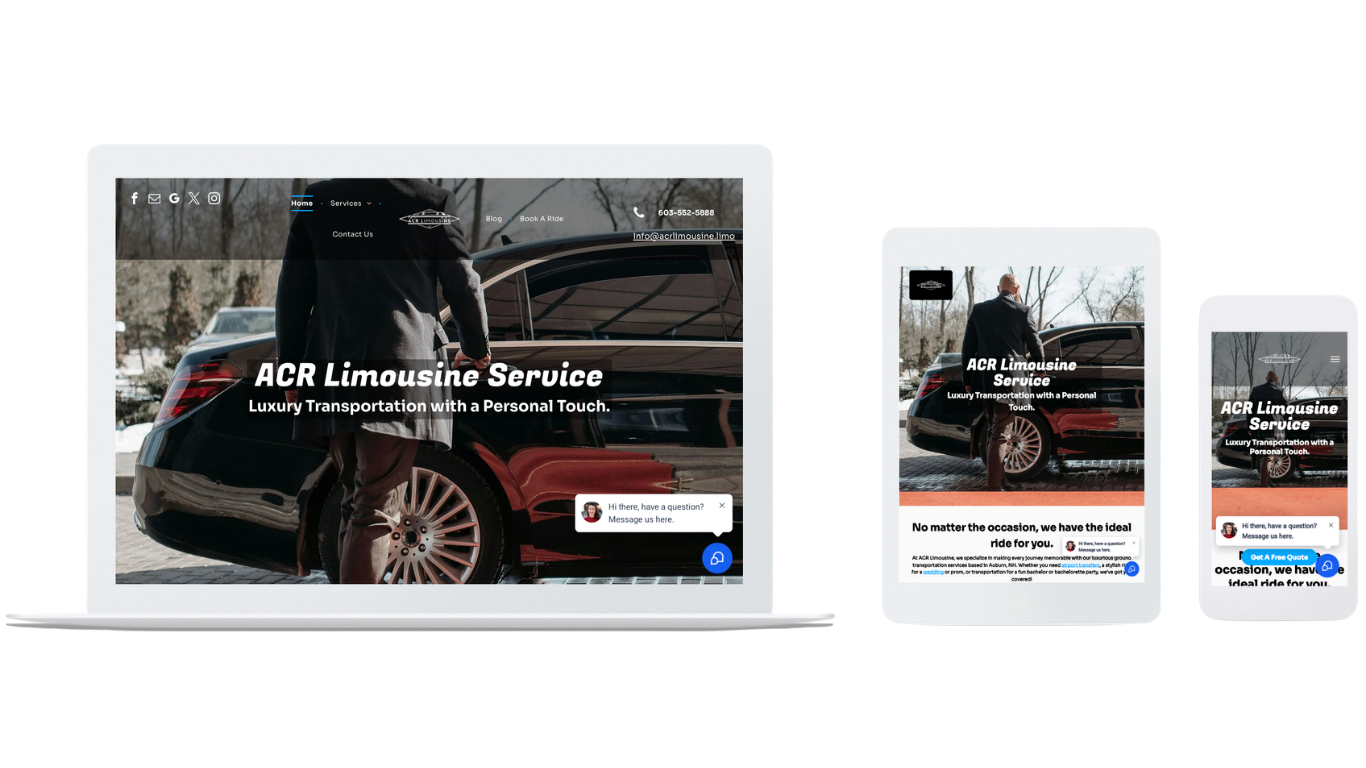
This is exactly why Forget Me Never Media only works with local service businesses. Josh has spent 15 years learning the specific search patterns that drive actual bookings for contractors, auto detailers, transportation companies, and exterior cleaning services. His work with ACR Limousine Service demonstrates this focus directly — 835% organic search growth specifically for high-intent transportation searches, resulting in a 35% revenue increase within six months. Not traffic growth. Revenue growth.
The fix requires mapping every keyword target to your actual service offerings and what your customers are willing to pay. If you charge $300 minimum for a service call, you need to rank for searches made by people with $300 problems, not $30 questions.
Citations and Reviews Get Treated Like Checkbox Items
Every local business gets told they need consistent business information across 50+ directories and a steady stream of Google reviews. Both are true, but most approaches treat them like data entry projects instead of customer acquisition systems.
Directory citations matter — but not because having your business listed in dozens of obscure online directories impresses Google's algorithm. Citations work when they're placed where your actual customers look for service providers. A luxury transportation company needs presence in hotel concierge databases and wedding planning directories, not generic business listings that nobody in their target market uses.
The same principle applies to review generation. Most businesses ask every customer for a Google review and hope for the best. A more effective approach focuses on timing and context. Clients see better results by requesting reviews immediately after completing specific types of work that showcase expertise. An auto detailing business gets more valuable reviews by asking customers to mention specific services like paint correction or ceramic coating, not just leave a general star rating.
Over 88% of local searches on mobile result in a call or visit within 24 hours, according to research on local search behavior. Your citations and reviews are what determine whether that call comes to you or the competitor one listing below you in the map pack.
On-Page Optimization Ignores How Service Customers Actually Search
Your website probably has pages optimized for keywords like "professional landscaping services" when your customers actually type "someone to fix my sprinkler system tonight." That gap between SEO theory and customer reality costs you bookings every single day.
Service businesses face a unique optimization challenge. Your customers don't search like e-commerce shoppers who have time to research and compare. They search when they have an immediate problem that needs an immediate solution. A broken garage door at 7 PM generates searches like "garage door repair emergency" and "garage door company open now," not "residential garage door maintenance providers."
Most agencies optimize service business websites using tactics built for e-commerce — tactics that assume customers want to read detailed descriptions and compare features. Service customers want to know three things: can you solve my problem, are you available, and what will it cost. Your service pages should answer those questions immediately, for your most profitable types of calls, not try to rank for every possible keyword variation.
Josh structures on-page optimization around the actual customer journey for service businesses. Emergency services get optimized for availability and response time. Scheduled services get optimized for quality and reliability. Premium services get optimized for expertise and credentials. When someone finds your website through search, they should land on a page that matches exactly what they searched for — and makes the next step obvious.
Getting SEO That Actually Grows Your Service Business
Real local SEO for service businesses starts with accepting that your customers search differently than retail shoppers. They have urgent problems, immediate needs, and specific budgets. Your optimization strategy should reflect this reality instead of chasing generic keyword rankings that look good in reports but don't fill your schedule.
Josh has built his entire approach around this principle. His 12 years of Google Ads experience taught him which search terms actually convert for service businesses. His 8 years in local SEO showed him how to capture that same buying intent through organic search. The combination creates a complete search visibility system that drives qualified prospects who are ready to book, not just browse.
No long-term contracts. No vanity metrics dressed up as results. Just search visibility built around the searches that actually drive revenue for your type of business.
Table of Contents
IS YOUR BUSINESS READY FOR 2026?
Get a free digital marketing audit and see exactly where your biggest opportunities are hiding.