
Mobile-First Web Design for Service Businesses: What It Actually Means
Our average client sees 185% revenue growth after we rebuild their complete marketing system — and in every case, the website rebuild starts with one question: how does this business's customer actually search for and evaluate them on a phone? Not a desktop. Not a laptop. A phone, usually in the middle of a situation that prompted the search.
As of 2025, 71% of Google searches happen on mobile devices. For local service businesses — contractors, detailers, transportation companies, exterior cleaners — that number is even higher because their customers are often searching in context. Someone standing in a parking lot after a fender bender. A restaurant manager in a walk-in cooler that stopped cooling. A homeowner looking at moss-covered gutters on a Saturday morning. These aren't casual research sessions. They're urgent searches made on mobile that turn into phone calls within minutes — or don't, depending on whose website they land on first.
Mobile-First Means Conversion-First, Not Screen-Size First
The most common misconception about mobile-first design is that it means making a desktop site fit on a smaller screen. That's responsive design — a technical baseline that most websites meet. Mobile-first design is different. It means designing for how your customer actually behaves when they're on their phone with a problem to solve.
That behavior is predictable. They scan rather than read. They want a phone number immediately visible and clickable. They want to confirm in seconds that this business serves their area and does the specific thing they need. They have low patience for anything that makes the next step harder — forms that require zooming, navigation menus that obscure key information, pages that take too long to load on a cellular connection.
Google's own data shows that 53% of mobile visits are abandoned when a page takes more than 3 seconds to load. Most template-built websites, particularly those running on WordPress with multiple plugins, routinely miss this threshold on mobile. The customer doesn't wait. They hit back and call the next business on the list.
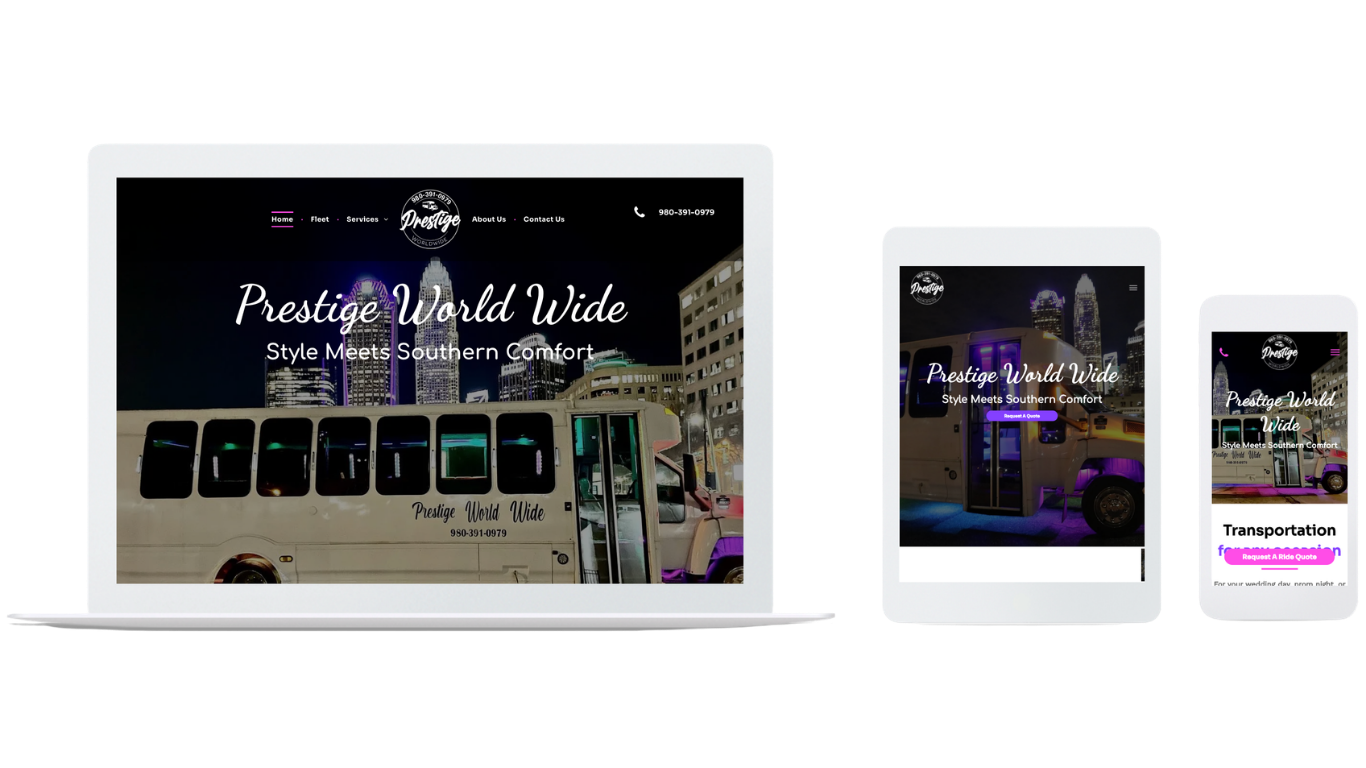
Prestige Worldwide Limos came to Forget Me Never Media with a website that was converting only 5% of visitors into leads. The site wasn't mobile-optimized, loaded slowly, and buried the booking request process behind a navigation structure built for desktop browsing. After a full mobile-first rebuild, their conversion rate improved from 5% to 13% — a 160% improvement — and they generated 418 total leads in the following period, a 414% increase in lead generation.
The Conversion Gap Starts Above the Fold
On mobile, "above the fold" means what a customer sees without scrolling — typically a relatively small portion of a page on a phone screen. That space has to do more work than the equivalent space on a desktop site because mobile visitors make faster decisions with less patience for hunting.
Every Forget Me Never Media website is built so that a mobile visitor can answer three questions without scrolling: does this business do what I need, do they serve my area, and how do I contact them right now. When those three questions can't be answered immediately, visitors leave. When they can, the phone rings.
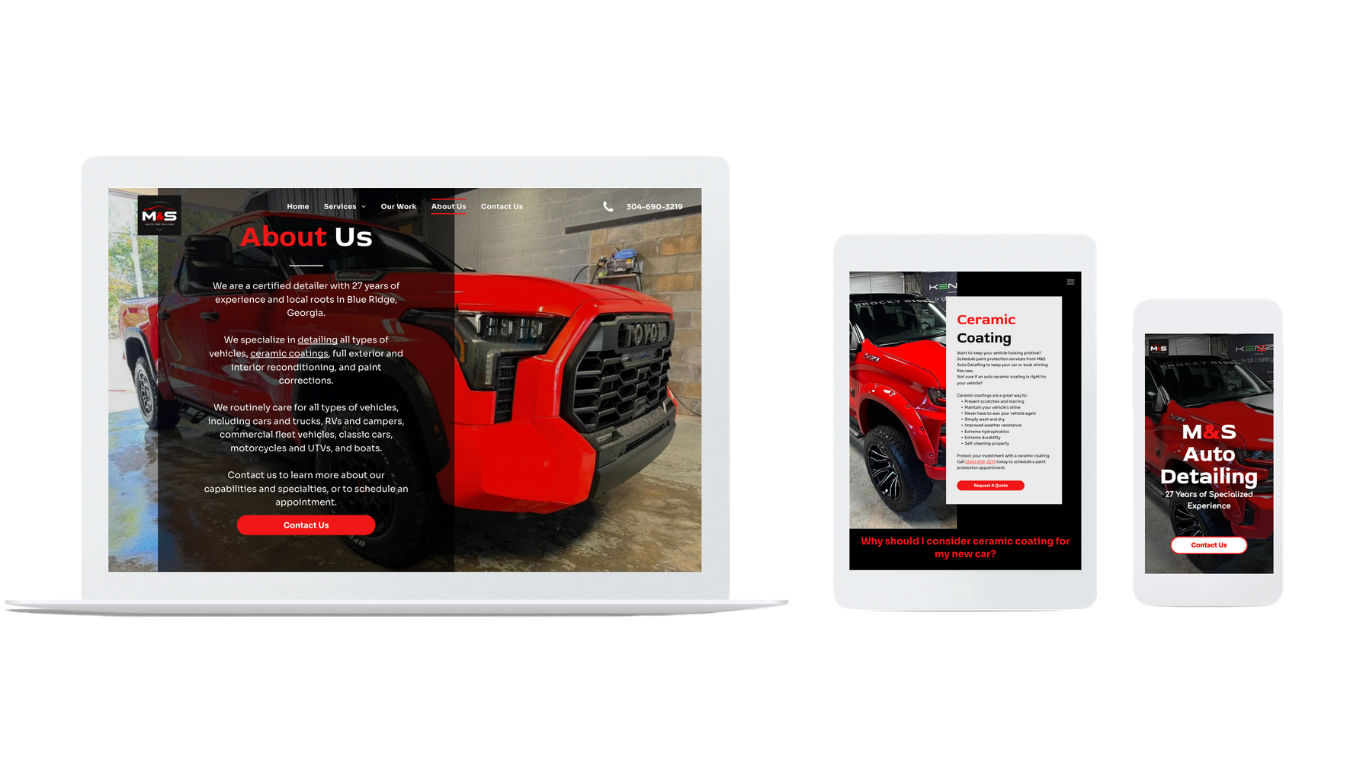
M&S Auto Detailing in Blue Ridge, Georgia had the expertise — 27 years of experience, premium services including ceramic coating and paint protection film — but their previous website wasn't communicating any of it effectively on mobile. The redesign prioritized mobile-first architecture with prominent service descriptions, clear service area information, and strategically placed contact options. The result was 208 qualified leads and a 174% increase in lead generation year-over-year, alongside a 34% improvement in website engagement rate.
Speed Is a Revenue Number, Not a Technical One
Page speed on mobile isn't a developer concern — it's a business concern. A site that loads in 4 seconds instead of 2 seconds on a mobile connection loses customers before they ever see your services. That loss is invisible — it shows up as absence, not as a bounced visitor — which is why so many businesses don't connect their slow website to their slow lead flow.
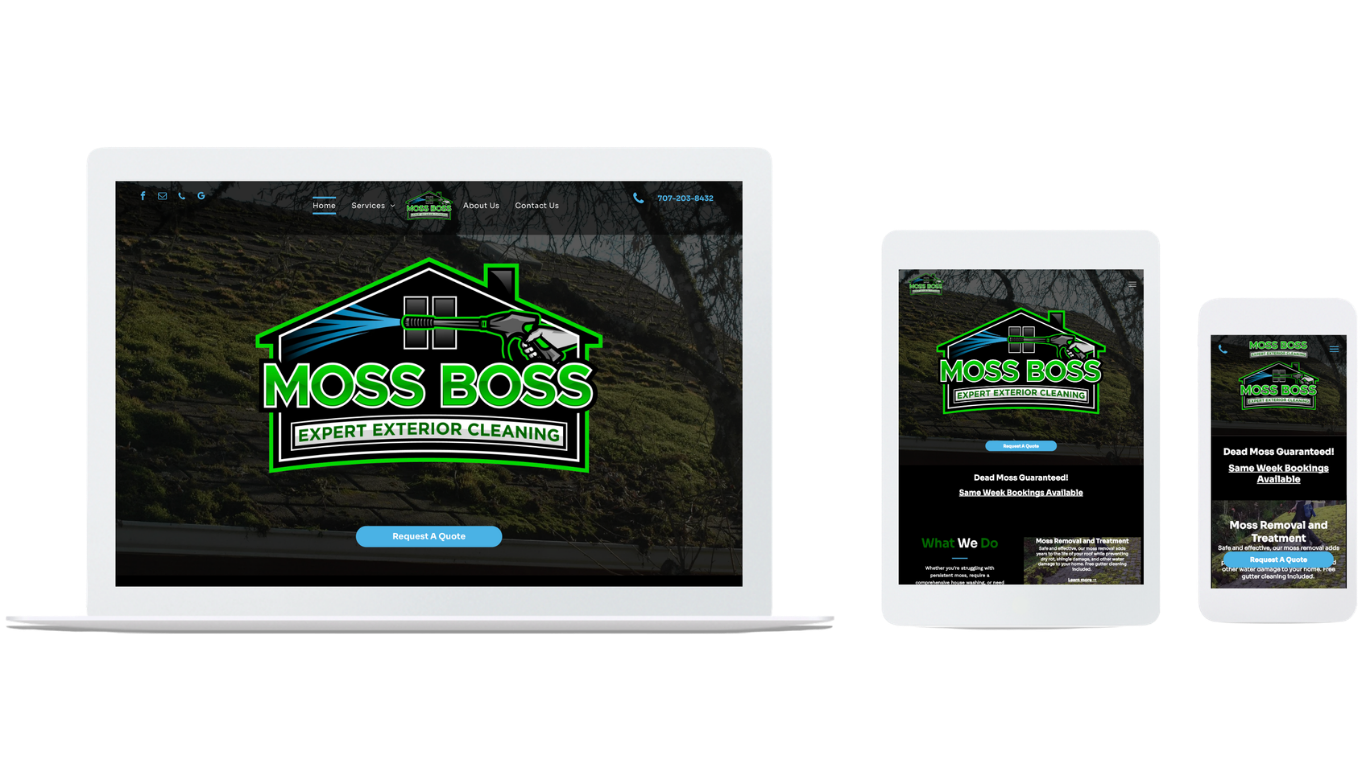
Moss Boss of Humboldt came to Forget Me Never Media with a website that wasn't optimized for mobile users or search engines. After a complete mobile-first rebuild combined with local SEO implementation, organic search traffic increased 272% in six months and the site achieved a 15%+ traffic-to-lead conversion rate. They went from inconsistent leads driven by word-of-mouth to a consistent pipeline of 60+ qualified leads per month — in a market where most customers search on mobile for moss removal and exterior cleaning services before calling anyone.
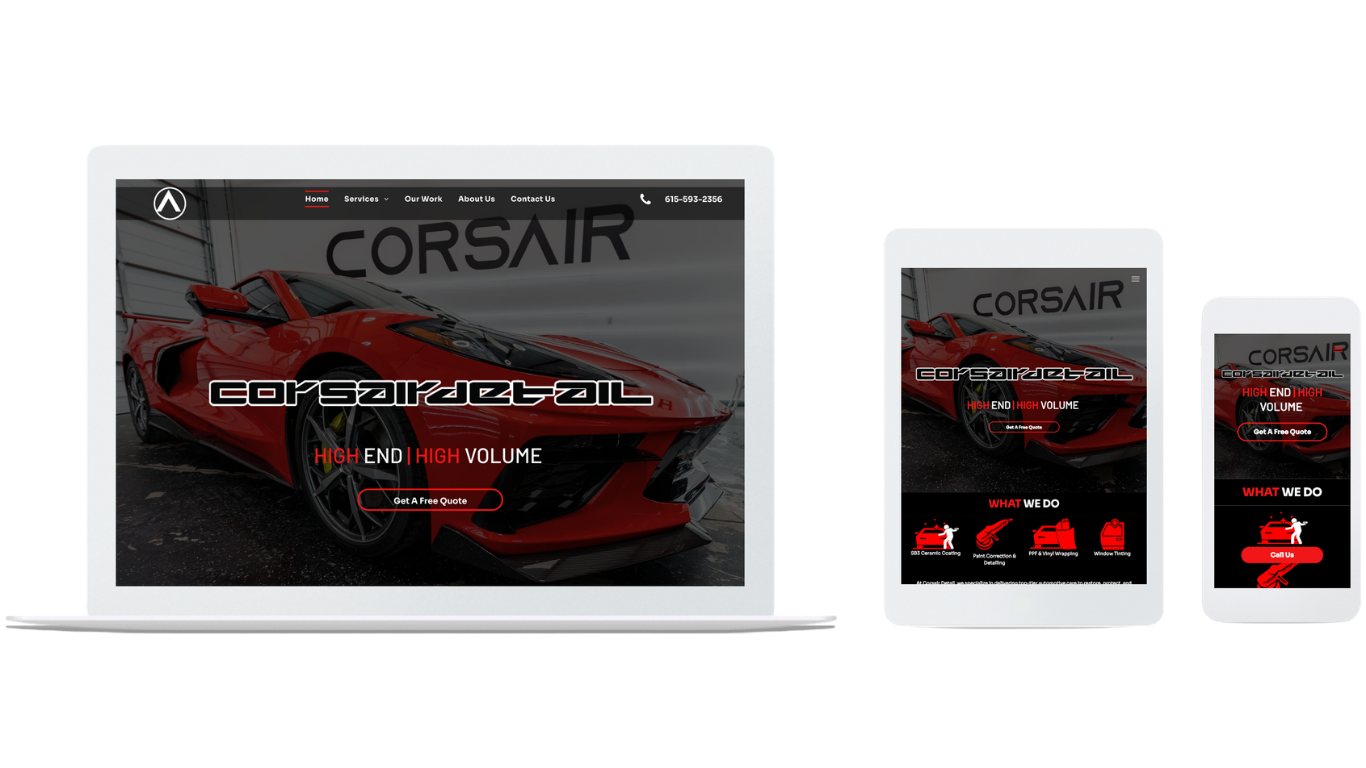
Corsair Detail in Nashville was generating leads but paying too much for them through heavy paid advertising dependency. Their website wasn't converting organic visitors efficiently enough to reduce that dependency. After a mobile-first rebuild, they generated 805 total leads and increased organic web traffic 48% year-over-year — significantly reducing their cost per lead and their reliance on paid platforms.
Trust Signals Work Differently on Mobile
A desktop visitor might read a full about page, review a portfolio, and spend several minutes evaluating whether to trust a business. A mobile visitor makes that judgment faster and with less information — which means the trust signals that appear first carry more weight than those buried further down.
For service businesses, the highest-converting mobile trust signals are real project photos that load quickly, review scores visible without scrolling, specific credentials relevant to the service being considered, and a real local phone number rather than a generic contact form as the primary call to action. Mobile visitors want to call — not fill out a form and wait. A site that makes calling the easiest action converts more mobile visitors than one where the phone number is hidden in a header menu.
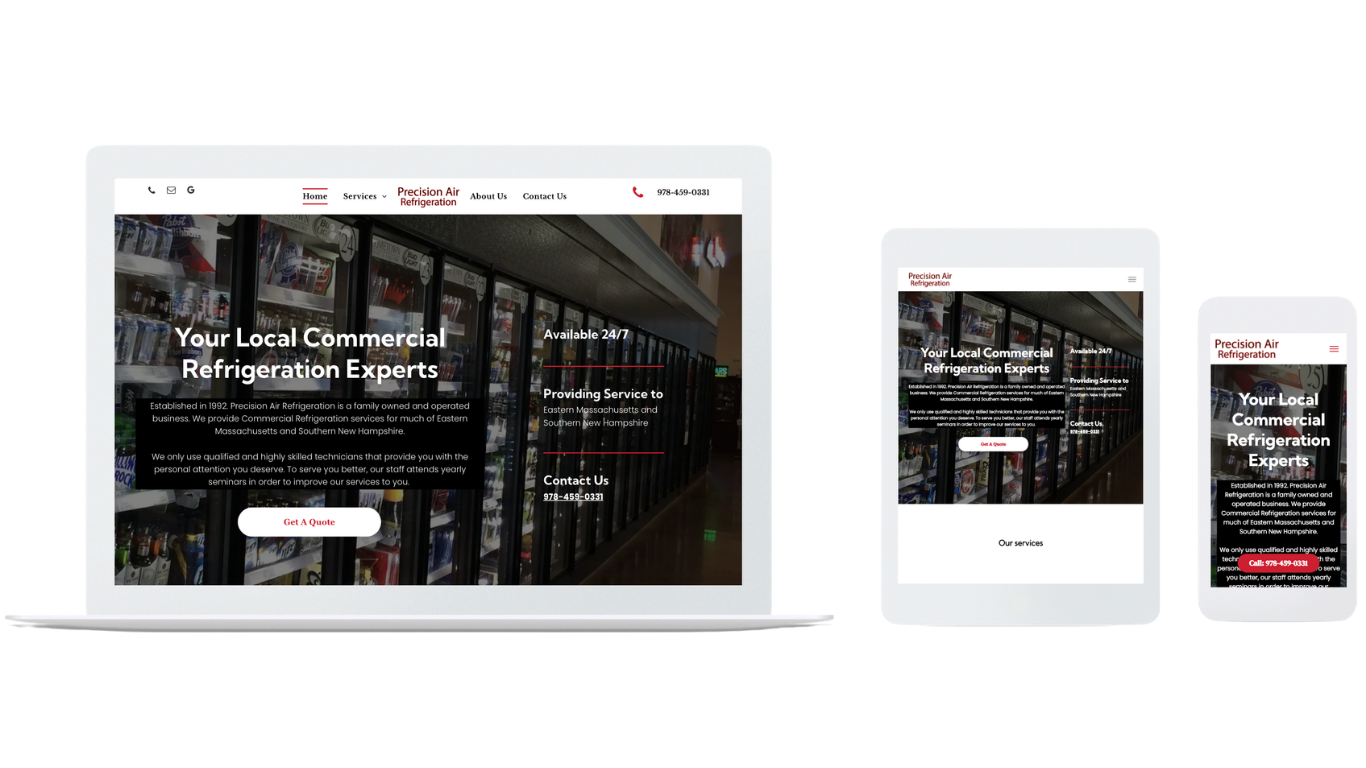
Precision Air Refrigeration, a 32-year-old commercial refrigeration company in Lowell, Massachusetts, needed a mobile presence that spoke directly to commercial buyers — restaurant managers and hotel operators searching from their phones for emergency refrigeration service. The mobile-first rebuild featured commercial client logos from recognizable brands like Domino's, Wendy's, and Taco Bell as immediate trust signals, alongside 24/7 emergency service messaging and click-to-call buttons optimized for on-site managers. Their visitor-to-lead conversion rate went from 3.5% to 13.85% — and the leads that came in were the right ones.
Mobile-First Is How Forget Me Never Media Builds Every Site
Forget Me Never Media builds every client website on Duda specifically because of how the platform performs on mobile. Fast load times, one-tap calling, and mobile-optimized form completion aren't features bolted on after launch — they're built into the foundation. A website that doesn't perform correctly on mobile in 2026 isn't a website for a local service business. It's a website for a business that's comfortable losing the majority of its qualified search traffic before those visitors ever see what the business does.
No long-term contracts. No templates built for someone else's business. Just mobile-first websites built around how your customers actually search, evaluate, and decide.
Table of Contents
IS YOUR BUSINESS READY FOR 2026?
Get a free digital marketing audit and see exactly where your biggest opportunities are hiding.