
Why We Build Every Client Site on Duda — And What That Means for Your Clients
Forget Me Never Media's clients see an average of 185% revenue growth after we rebuild their complete marketing system. Every one of those rebuilds starts on the same foundation: Duda. Not because it's the most popular platform, not because it's the cheapest, and not because it's what we learned first. Because after 15 years of building and managing websites for local service businesses, it's the platform that performs best for this specific use case — and platform choice has consequences that compound over years, not months.
Most agencies don't talk about this. They grab whatever template looks presentable, hand the project to a junior developer, and move on. The client ends up with a site that looked good in the presentation and performs poorly in the real world. By the time the business owner figures out that slow load times, poor mobile performance, and disconnected lead capture systems are costing them customers, they've usually signed a long-term contract that makes switching expensive.
This article is about why platform selection matters, what Duda does differently for service businesses specifically, and what you should expect from any platform powering a website that's supposed to generate leads.
Platform Selection Has Real Performance Consequences
The platform your website runs on determines load speed, mobile performance, integration capabilities, and how well your site scales as your business grows. These aren't technical abstractions — they're directly connected to whether a customer who finds your site on their phone at 9 PM stays and calls or bounces to a competitor.
Google's own data shows that 53% of mobile visits are abandoned when a page takes more than 3 seconds to load. Most WordPress sites running multiple plugins — the standard setup for a template-built small business website — regularly miss that threshold on mobile. The hosting infrastructure, image optimization, and code bloat that come with layered plugin architecture create performance problems that are difficult to fix after the fact because they're built into the foundation.
Duda handles performance at the infrastructure level rather than through add-on plugins. Image optimization, caching, and content delivery happen automatically rather than depending on which plugins are installed, how they're configured, and whether they conflict with each other. The result is a site that loads fast by default rather than one that requires constant maintenance to stay performant.
The target for every site Forget Me Never Media builds is a load time under 2 seconds on mobile. That's the benchmark that keeps visitors on the page long enough to see what the business does and take the next step.
Service Businesses Have Different Website Requirements Than E-Commerce
Most website platforms are built with e-commerce assumptions — product pages, shopping carts, purchase flows. Service businesses have fundamentally different needs that generic platforms handle poorly.
A local service business website needs to generate phone calls and contact form submissions, not process transactions. It needs to establish trust quickly because the customer is evaluating whether to let someone onto their property or hand their vehicle to a stranger. It needs location-specific pages for each service area rather than product categories. It needs review widgets that display current customer feedback, not product ratings. It needs click-to-call functionality that works reliably across every device, not a checkout button.
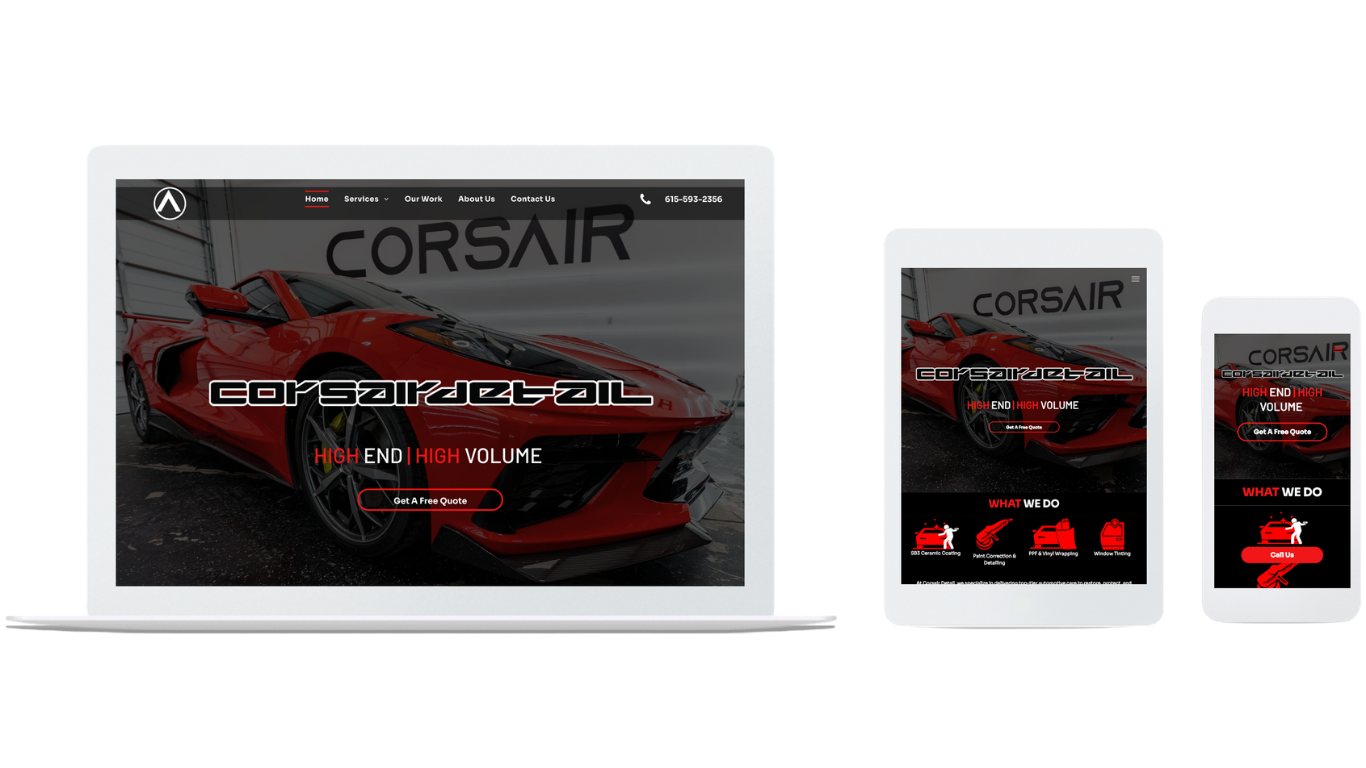
Duda's architecture handles these service-specific requirements cleanly. Lead capture forms integrate directly with workflow automation — when someone submits a form on a Corsair Detail service page at midnight, an automated response goes out immediately rather than sitting in an inbox until morning. Corsair Detail generated 805 total leads and increased organic traffic 48% year over year after moving to a Duda foundation with integrated automation.
Review widgets pull current Google reviews and display them where they matter — on service pages, where a customer is making their decision — not buried on an about page. Location pages for different service areas maintain consistent performance and SEO structure without requiring manual optimization for each new city added.
The Integration Argument Most Agencies Skip
Forget Me Never Media's six-service system — brand development, web design, local SEO, Google Ads, workflow automation, and Panoptix CRM — is built around tools that work together. Duda is the foundation because it integrates cleanly with every other component.
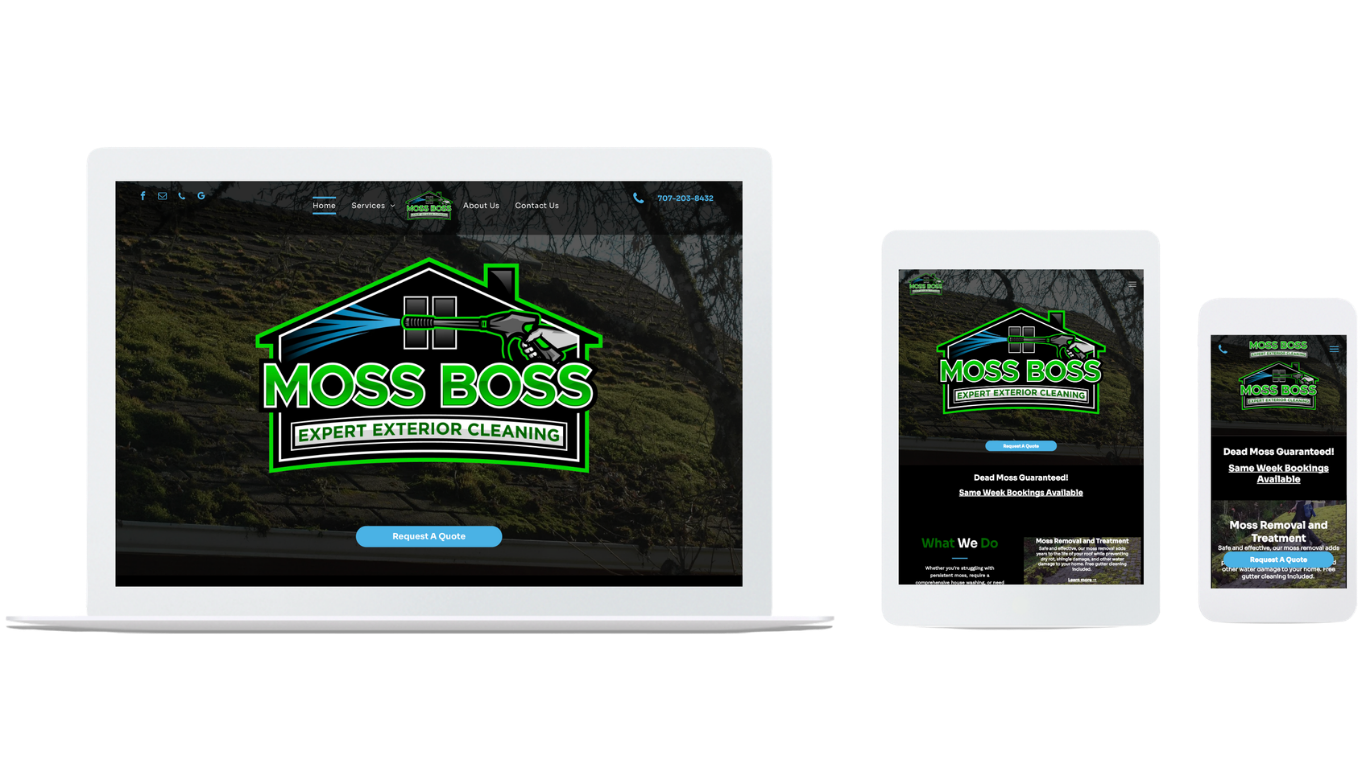
When a visitor lands on a Moss Boss of Humboldt service page, fills out a quote request, and that submission triggers an automated follow-up sequence in the CRM, none of that requires manual intervention or custom integration work. The systems talk to each other because they were chosen to talk to each other. Moss Boss went from inconsistent word-of-mouth leads to a consistent pipeline of 60+ qualified leads per month after the full system rebuild — a 272% increase in organic search traffic and 180% increase in monthly revenue in six months.
Most agencies build websites in isolation from the rest of a client's marketing. The site launches, it looks good, and then nobody ever connects it to a CRM, automated follow-up, or conversion tracking system that would show whether it's actually generating revenue. The result is a website that might be getting traffic — a metric that shows up in reports — without anyone knowing whether that traffic is turning into customers.
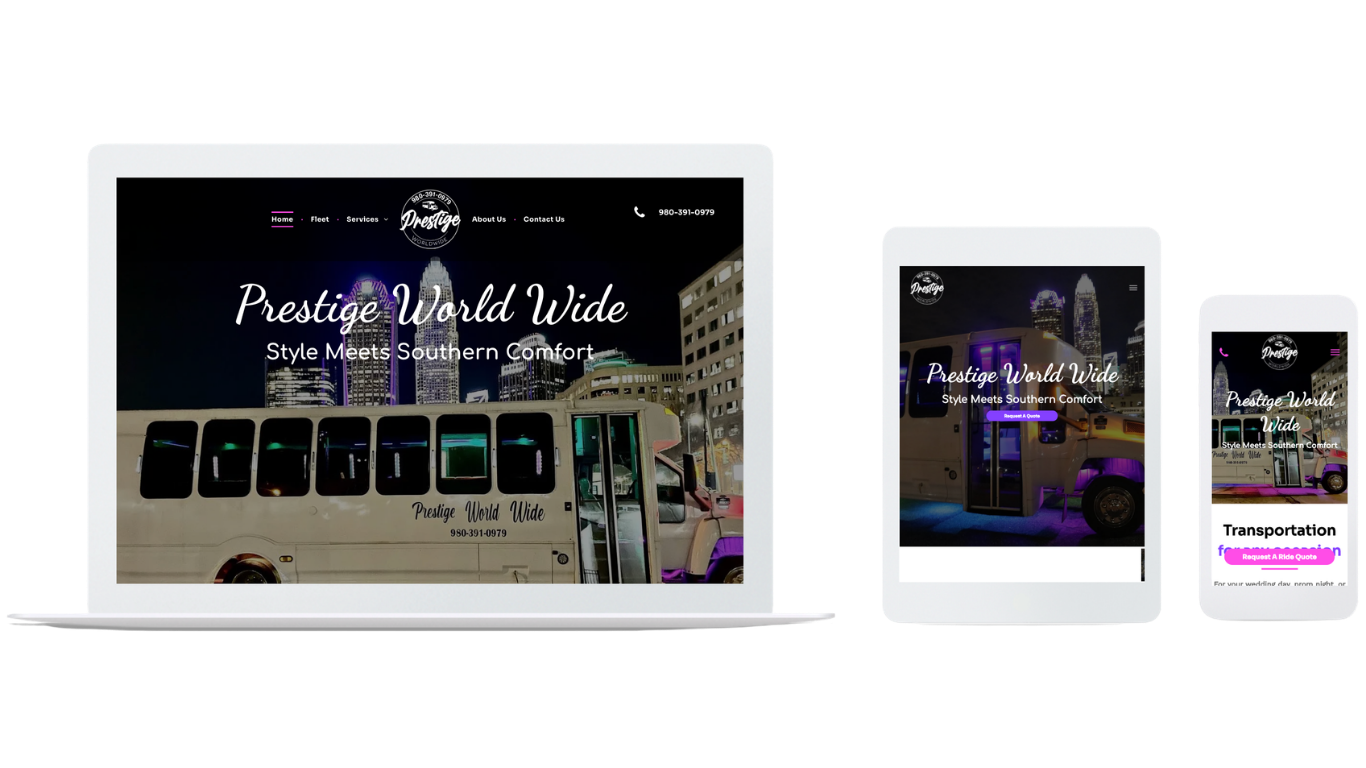
Prestige Worldwide Limos had that problem. Their website was live, they had some organic traffic, but their conversion rate was 5%. Visitors were coming and leaving without taking action. After a full rebuild on Duda with integrated lead capture, mobile optimization, and connected follow-up automation, conversion jumped from 5% to 13% — a 160% improvement — and lead generation increased 414% year over year.
What to Ask Any Agency About Their Platform Choice
For agency owners and marketers evaluating platforms for client sites, the questions worth asking go beyond "what does it look like." Does it load in under 2 seconds on mobile without ongoing plugin management? Does it integrate with the CRM and automation tools the client uses? Does it support location-specific pages without duplicating content? Does the mobile experience require separate maintenance from the desktop experience, or is it built in from the start?
The platform that requires the least ongoing maintenance while delivering the best performance is almost always the right choice for a local service business — because the business owner doesn't want to spend time managing a website, they want to spend time running their business.
After building and managing websites for 40+ clients across contracting, auto detailing, luxury transportation, exterior cleaning, commercial refrigeration, and other local service industries, the answer to those questions consistently points to Duda. Not as a preference — as a conclusion that holds up across industries, markets, and budget levels.
No long-term contracts. No templates built for a different business. Just a platform chosen because it performs, connects to everything else, and gives local service businesses a foundation that actually supports growth instead of limiting it.
Table of Contents
IS YOUR BUSINESS READY FOR 2026?
Get a free digital marketing audit and see exactly where your biggest opportunities are hiding.