
What Your Website Should Do Before Someone Calls You
Our average client sees 185% revenue growth after we rebuild their complete marketing system. A significant part of that starts before a single phone call is made — in the moments a potential customer spends on a website deciding whether to trust a business enough to pick up the phone.
Most service business websites skip this step entirely. They present information and wait for a visitor to decide. The websites that convert do something different — they actively answer the three questions every visitor is silently asking before they'll commit to calling anyone. Get those three questions answered quickly and clearly, and your phone rings more. Leave them unanswered, and visitors leave for a competitor whose website did the work yours didn't.
The Three Questions Every Visitor Asks Before They Call
Every person who lands on a service business website is running through the same mental checklist regardless of whether they're aware of it. The checklist has three items and it runs fast.
First: can you actually do what I need? Not in general terms — specifically. A visitor searching for ceramic coating in Nashville needs to see ceramic coating on your website, not "auto detailing services" that might or might not include what they need. A homeowner with a leaking roof needs to see emergency roof repair, not "residential roofing solutions." Generic service descriptions create uncertainty. Uncertainty kills conversions.
Second: are you any good at it? This is the credibility question and it can't be answered with claims. "Professional," "experienced," and "quality service" mean nothing because every competitor says the same thing. It gets answered with evidence — real project photos, specific results, recognizable credentials, reviews from real customers who describe real outcomes. The visitor scanning your website is pattern-matching for proof, not promises.
Third: is reaching you easy and safe? Easy means a phone number that's visible and clickable, a contact option that doesn't require filling out six fields, a response time promise that removes uncertainty about what happens after they reach out. Safe means the business feels legitimate — a real address, a real person behind it, no obvious signs that this might be a fly-by-night operation.
These three questions take seconds to answer well or poorly. Most template websites answer all three poorly — not because the business isn't good, but because the site wasn't built around the visitor's decision process.
Answer the First Question: Be Specific About What You Do
The fastest way to lose a visitor who needs your most profitable service is to describe your business in terms so broad that they can't tell whether you offer it. Service businesses list everything they do and trust visitors to find what they need. Converting websites lead with the specific services that match the highest-value searches and make it immediately clear whether this is the right business for this visitor's problem.
This means individual service pages built around specific search queries — not one services page listing everything. It means homepage messaging that speaks to the most common urgent need your customers have, not a general description of your capabilities. It means using the language your customers use — "pressure washing" not "exterior surface cleaning solutions" — so the match between what they searched for and what they found is immediate.
Josh structures every Forget Me Never Media website around the services that generate the most revenue for the business first. Visitors looking for those services should confirm within seconds that they've found the right place. That confirmation is what keeps them on the page long enough to answer the next two questions.
Answer the Second Question: Let Proof Do the Selling
The credibility question is where most service business websites fail. They describe quality instead of demonstrating it. A visitor who has been burned before — and most of them have — doesn't trust descriptions. They look for evidence.
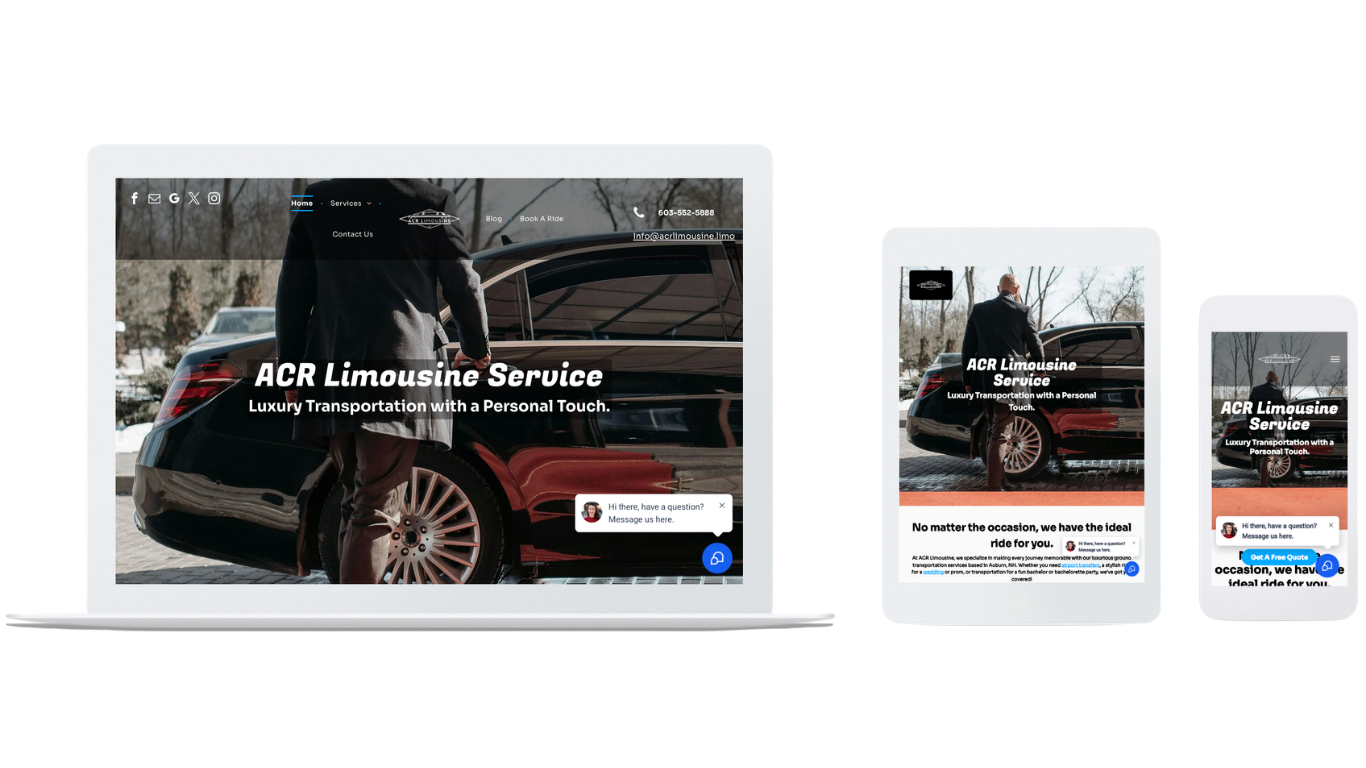
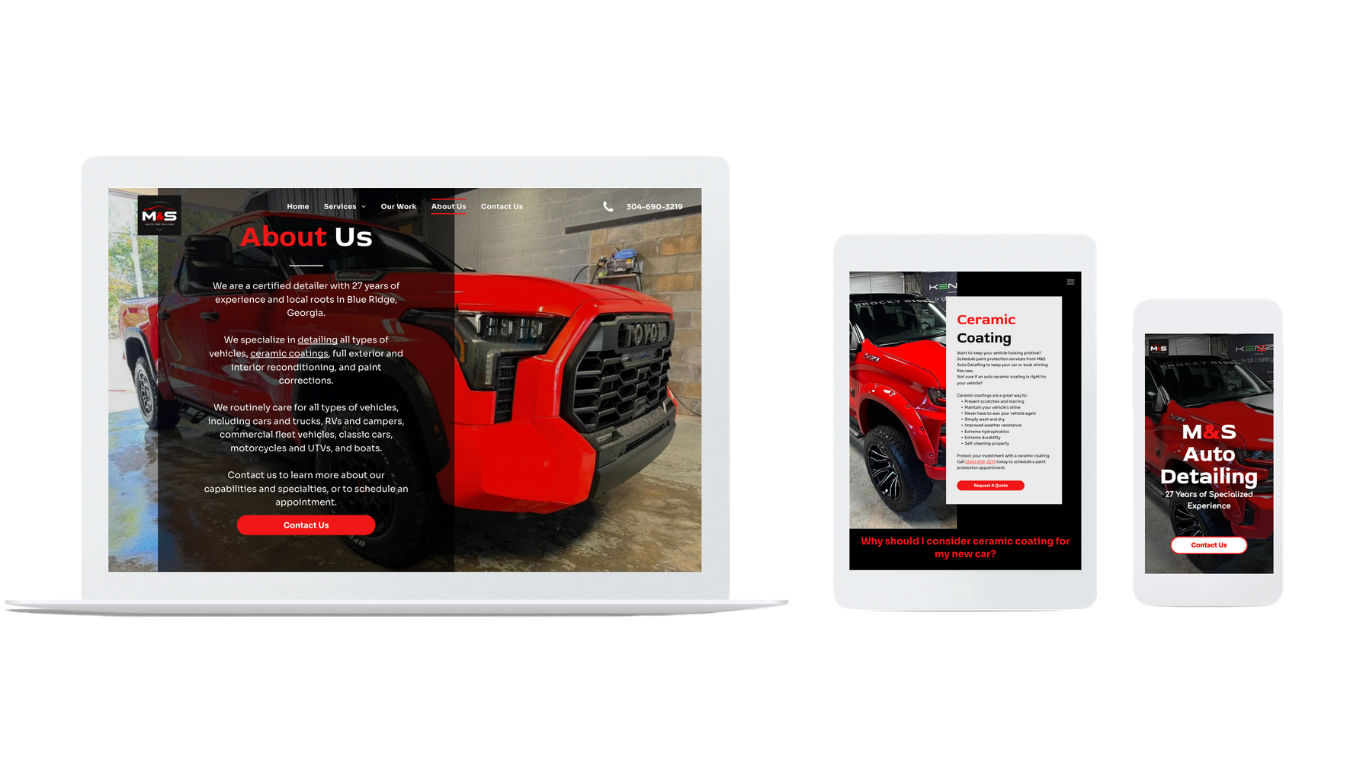
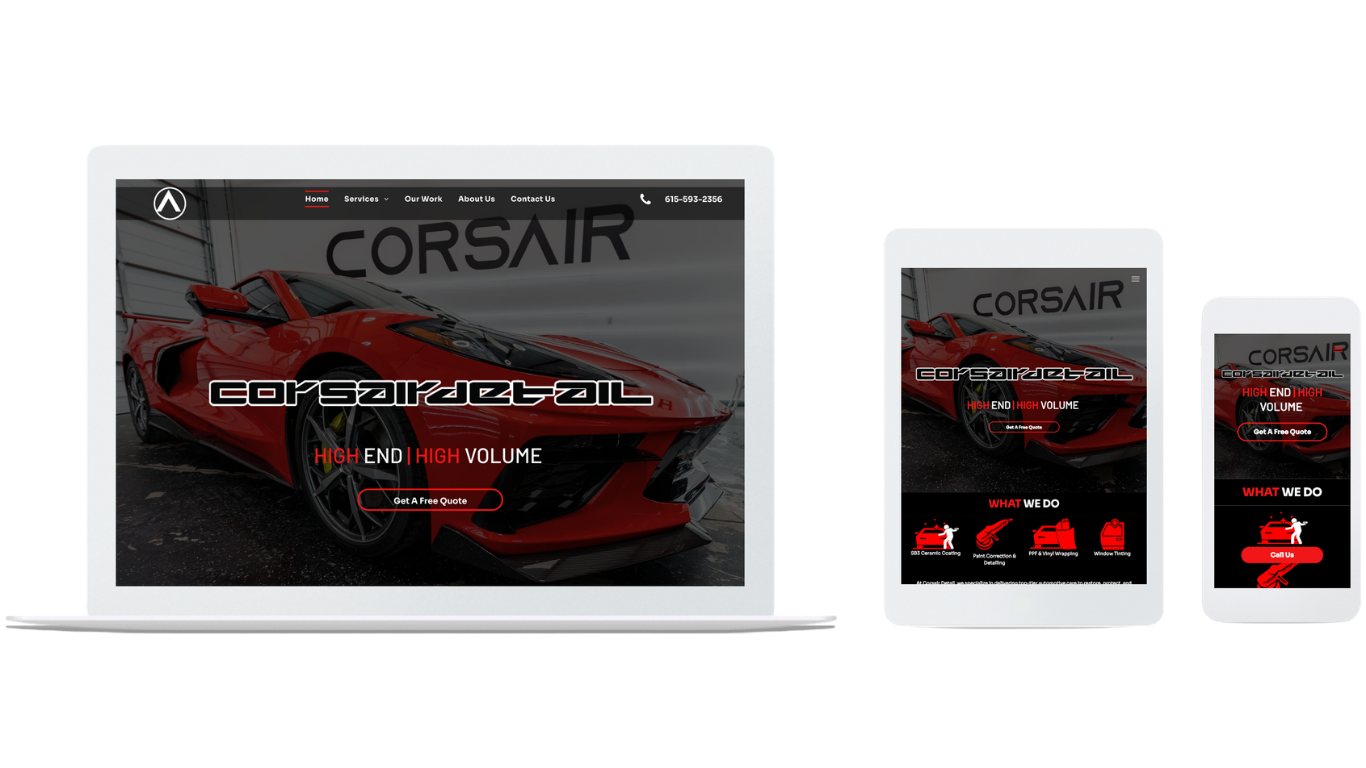
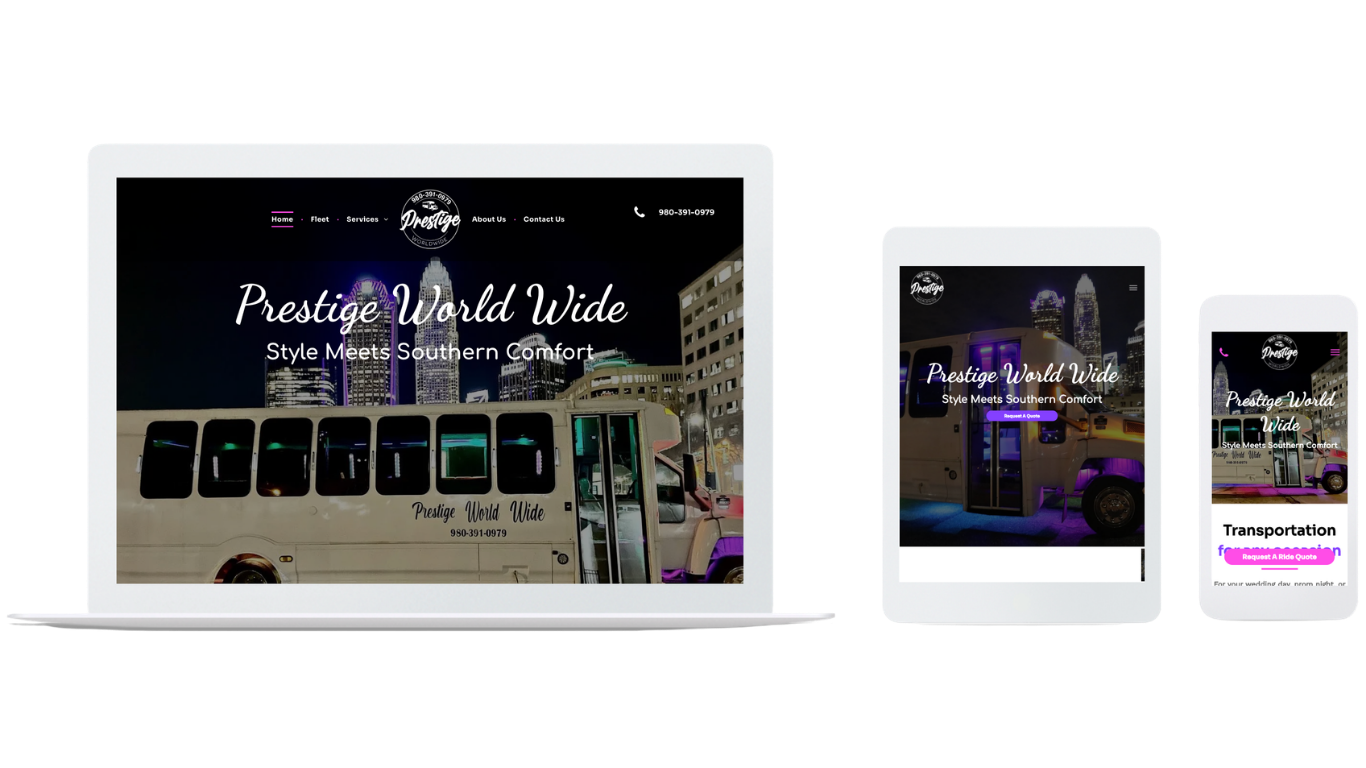
Real project photos are the most powerful credibility signal a local service business can display. Not stock photos of a generic finished product — photos of your actual work, in your actual service area, showing the kind of transformation or result your customer is looking for. A detailer's before-and-after paint correction photos. A contractor's completed deck with the specific materials and design the homeowner chose. A transportation company's actual fleet, not a generic luxury vehicle image.
Customer reviews with specifics outperform star ratings without context. A review that says "they refinished our hardwood floors throughout a 2,400 square foot house in two days, matched the stain perfectly, and cleaned up completely before they left" does more work than ten five-star ratings with no text. Guide customers to leave reviews that describe the specific job, the specific outcome, and what they were most impressed by. That language builds credibility with future visitors while simultaneously strengthening local search relevance.
Credentials that matter to your customer's specific concern belong on service pages, not buried on an about page. A customer hiring someone for emergency electrical work wants to see licensing information before they call. A customer booking luxury transportation wants to see fleet photos and safety credentials before they commit. Putting credentials where the concern is felt — on the relevant service page — answers the trust question at the moment it's being asked.
Answer the Third Question: Make the Next Step Obvious and Easy
The visitor who has confirmed you do what they need and has decided you seem credible has one remaining question: what do I do now, and how confident am I that reaching out will be worth it?
This is where most websites create unnecessary friction. Phone numbers that aren't clickable on mobile. Contact forms that require more information than necessary to qualify for a response. No indication of how quickly the business responds or what happens after someone submits a form. Every one of these friction points is a reason for a visitor who was close to calling to hesitate — and in local service businesses where customers are comparing three options simultaneously, hesitation costs you the job.
The fix is straightforward. A clickable phone number on every page, prominent enough to find without scrolling. A contact option that requires only the minimum information necessary to start a conversation. A response time commitment that removes uncertainty — "we respond to all inquiries within 2 hours during business hours" is a small promise that does significant conversion work because it tells the visitor exactly what to expect.
Workflow automation behind the form matters just as much as the form itself. A visitor who submits a contact request at 9 PM and doesn't hear back until the following afternoon has likely already hired someone else. Forget Me Never Media builds automated follow-up into every client website so the response happens within minutes regardless of when the inquiry comes in. The website earns the lead. The automation closes the gap before a competitor does.
The Pre-Call Trust Sequence
The businesses that consistently convert website visitors into calls have websites that run the same sequence every time: confirm you do the specific thing the visitor needs, demonstrate you do it well with real evidence, and make the next step so easy and obvious that hesitation has no foothold.
This isn't about design. It's about understanding that a visitor landing on your website is in a decision process, not a browsing session — and building every page to move that decision forward rather than leaving it to chance.
Fifteen years of building and optimizing local service business websites has shown Josh one consistent pattern: the businesses that answer all three questions clearly, specifically, and quickly get the call. The ones that don't keep wondering why their traffic doesn't convert.
No long-term contracts. No digital brochures. Just websites built around the decision your customer is making before they pick up the phone.
Table of Contents
IS YOUR BUSINESS READY FOR 2026?
Get a free digital marketing audit and see exactly where your biggest opportunities are hiding.